Here is how to store dahlia tubers over winter: wait for the first frost to blacken the leaves, cut the stems to 2 to 4 inches, and dig the clumps 1 to 2 weeks later. Rinse off the soil, let them dry for 1 to 2 days, then pack them in barely damp peat moss, vermiculite or wood shavings. Keep them dark at 40 to 50°F (4 to 10°C) and check them once a month for rot or shriveling.
Dahlias give you more flowers per plant than almost anything else in the garden, right up until the first frost turns them black overnight. In USDA zones 7 and colder, the tubers underneath rarely survive frozen, soggy ground, so if you want the same plants back next summer, you need to lift them.
Learning how to store dahlia tubers comes down to two things: keep them cool, and keep them from getting too wet or too dry. Get that balance right and one clump can turn into five or six plants by spring.
Here is when to dig, how to clean and cure the clumps, which storage method suits your space, and what to do if something goes wrong in February.
Do you need to dig up dahlias in your zone?
Dahlias are reliably hardy only in about zones 8 to 11. The tubers are mostly water, so once the soil around them freezes, they turn to mush. Cold, waterlogged soil is the other big killer, even where winters are mild.
| USDA zone | Typical first frost | What to do with dahlias |
|---|---|---|
| Zones 3 to 5 | Mid-September to early October | Dig and store every year |
| Zone 6 | Mid to late October | Dig and store every year |
| Zone 7 | Late October to mid-November | Dig to be safe, or gamble with 6 inches of mulch in a sheltered, well-drained bed |
| Zone 8 | November to early December | Usually fine in the ground under 4 to 6 inches of mulch if the soil drains well |
| Zones 9 to 11 | Late or none | Leave them in; dig only to divide crowded clumps or if the soil stays soggy |
Frost timing varies a lot even inside one zone. Our Frost Date Finder gives your average first frost by ZIP code, so you know roughly when to have a fork and a few boxes ready.
Outside the US: In the UK, most gardeners lift dahlias in October or November after the first frost, although many in milder southern and coastal gardens leave them in under a thick mulch. In Canada, digging is a must almost everywhere, often by mid-October. In Australia the seasons flip, so cut back and lift in late autumn (May to June) in cooler areas like Melbourne, Canberra and Tasmania. In Sydney and warmer coastal areas, dahlias can usually stay in well-drained soil.
When to dig up dahlia tubers
Timing matters more than most people expect. Tubers dug early, while the plant is still green and growing, have thin skins that tend to shrivel in storage.
The best signal is a killing frost of about 28 to 32°F (-2 to 0°C) that blackens the leaves. Within a few days, cut the stems down to 2 to 4 inches. Then leave the tubers in the ground for another 1 to 2 weeks. That short wait lets the skins toughen up, which is a big part of what gets them through winter.
No frost by early November? Cornell Cooperative Extension suggests digging anyway at that point. Cut the plants back and give them the same week or two before lifting.
Cap the cut stems. Dahlia stems are hollow, so rain can run down them straight into the crown. Cover each stub with a plastic cup or a square of foil while the tubers cure in the ground.
How to store dahlia tubers, step by step
1. Label every plant before you dig
Once the flowers are gone, every clump looks the same. Tie a plant tag with the variety name to each stem before you cut it back. After the tubers dry, you can also write the name right on the skin with a permanent marker.
2. Dig wide and lift gently
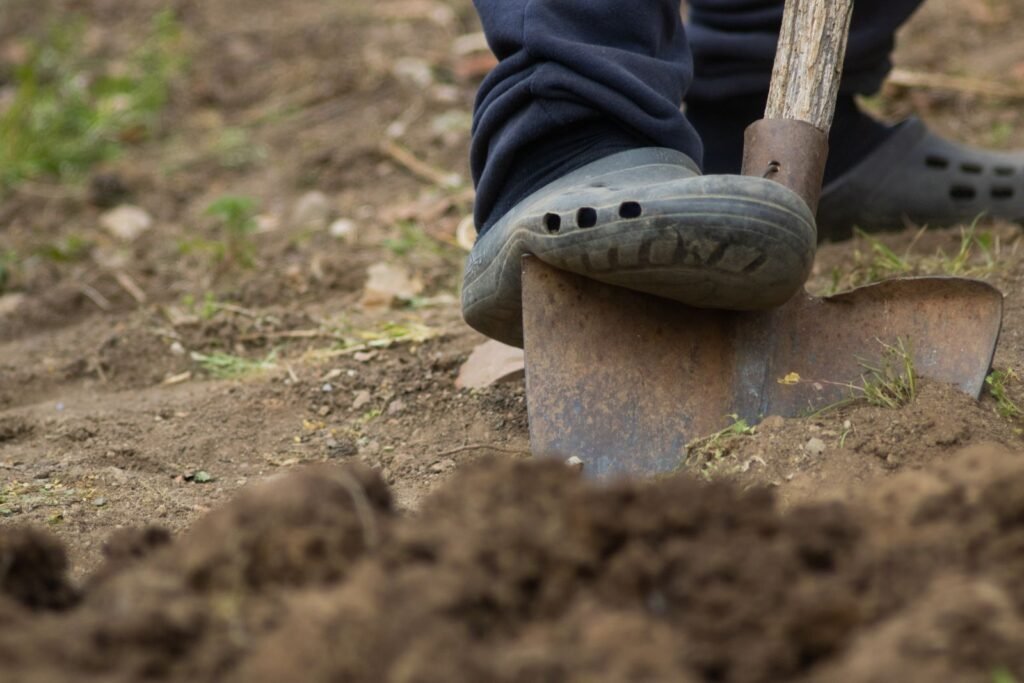
Push a garden fork into the soil about 12 to 18 inches out from the stem, working all the way around, then rock the clump up from below. Never pull it out by the stem. The necks where each tuber joins the crown are thin and snap easily, and a tuber with a broken neck won’t sprout.
3. Rinse and let them dry
Shake off the loose soil, then rinse the clump with a gentle hose spray. Clean tubers make rot and eyes easier to spot. Turn the clumps upside down so water drains out of the hollow stems and let them dry for 24 to 48 hours somewhere sheltered and above 35°F (2°C), like a garage or covered porch.
Dry them on newspaper or a rack rather than bare concrete, and don’t leave them out for a week. Tubers start losing moisture fast once they are out of the ground.
4. Trim and decide whether to divide
Snip off the thin feeder roots and any skinny tubers with thread-like necks, since those rarely grow. Then choose: store the clump whole, or divide it now. Each division needs a piece of the crown with at least one eye, the small bump where next year’s sprout comes from.
Whole clumps hold moisture better and take less work in fall. Eyes are also much easier to see in spring, so if you are new to dahlias, storing whole and dividing in March or April is the easier route.
Throw out any soft tubers. A tuber that feels mushy, smells sour or collapses when you squeeze it belongs in the trash, not the compost. Rot spreads to every tuber it touches over the winter.
5. Pack them in a storage medium
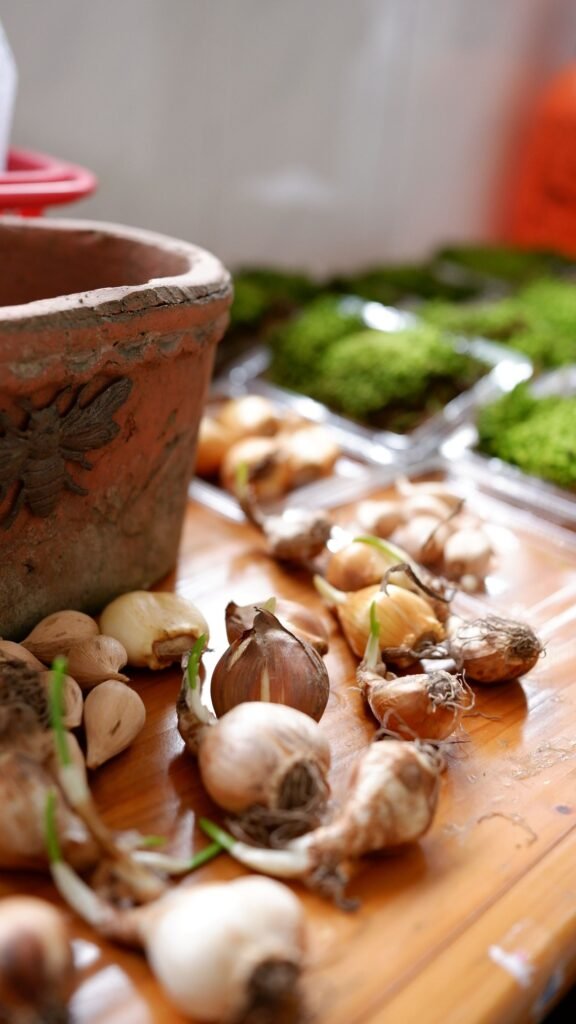
Lay the tubers in a cardboard box, plastic bin or paper bag and surround them with a storage medium so they don’t touch each other. Peat moss, vermiculite, a 50/50 mix of the two, wood shavings (the kind sold as pet bedding) and even plain potting mix all work.
The medium should feel dry to barely damp, never wet. If you use a plastic bin, leave the lid slightly open or drill a few small holes so moisture can escape.
6. Keep them cool, dark and steady
Aim for 40 to 50°F (4 to 10°C), with about 45°F (7°C) as the sweet spot. Good places include an unheated basement, an insulated garage, a crawl space or a closet on an outside wall. Below 35°F (2°C) they can freeze, and above 50°F (10°C) they tend to dry out or sprout early. Leave a thermometer in the spot for a week before you commit to it.
Keep the box away from pets. The ASPCA lists dahlias as toxic to dogs, cats and horses. Eating them usually causes mild stomach upset, but a box of tubers in the garage is tempting for a dog that likes to chew, so store it on a shelf.
Other ways to store dahlia tubers
Plastic wrap
Some growers divide in fall and wrap each tuber tightly in kitchen plastic wrap, which locks in moisture. It works well in dry basements. The downsides are the time it takes and that you can’t see rot starting, so label each tuber with a marker before wrapping.
Zip-top bags of vermiculite
Put 3 or 4 tubers in a gallon bag with a few handfuls of vermiculite, leave it partly open and stand the bags in a box to block light. This suits small collections, and if one tuber rots, the problem stays in one bag.
The refrigerator
If you have no cool spot at all, a crisper drawer can work for a handful of tubers. Fridge air is dry, so pack them in barely damp medium in a loosely closed bag and check them every couple of weeks.
Check on them once a month
Set a reminder for the first of each month, open the box and gently squeeze a few tubers. Here is what to look for.
Wrinkled or shriveled
They are too dry. Mist the medium lightly with a spray bottle. A little wrinkling by late winter is normal, and firm-but-wrinkled tubers usually plump up after planting.
Soft, dark or smelly
That is rot. Remove those tubers right away. If it is only a small spot on an otherwise firm tuber, you can cut back to clean, white flesh, let the cut dry for a day and put it back in fresh medium.
White or gray mold
Surface mold usually means too much moisture. Wipe it off, let the tubers air-dry for a day and swap in drier medium.
Early sprouts
Your storage spot is too warm. Move the box somewhere cooler. Long, pale sprouts can be pinched off, and the eyes will sprout again.
Getting dahlias ready for spring
About 4 to 6 weeks before your last frost, usually late February to March in most of the US, bring the tubers into a warmer, brighter room. The eyes swell within a couple of weeks, which makes dividing much easier.
Plant them outside once the soil reaches about 60°F (16°C), usually around your last frost date. Our Planting Calendar shows the timing for your area. While the dahlia bed sits empty this fall, it is also a good spot for spring bulbs; see when to plant tulip bulbs, and our fall garden cleanup guide for the rest of the yard.
Best supplies for storing dahlia tubers
Prices change often, so check the store for today's price.Espoma Organic Peat Moss (8 qt)
Lightly damp peat moss is the classic dahlia storage medium. It cushions tubers, keeps them from touching and holds just enough moisture to stop shriveling without staying soggy.
- Holds moisture without turning wet
- Easy to find in garden centers and online
- Leftovers mix straight into spring potting soil
- Downside: Dusty when dry, so mist it before using
- Downside: Peat is slow to renew, wood shavings are an alternative
How to use it: Mist until barely damp, then bury the tubers so none of them touch.
Compare stores — match the model, size, seller and delivery cost.
Search links show store results, not confirmed offers. Prices and availability must be checked at the store.
Espoma Organic Vermiculite (8 qt)
Vermiculite is clean, light and holds moisture well, which makes it ideal for the zip-top bag method or for mixing 50/50 with peat moss.
- Clean and light to handle
- Holds and releases moisture slowly
- Reusable for seed starting
- Downside: Very light, so it blows around outdoors
- Downside: Wear a mask when pouring large amounts
How to use it: Add a few handfuls per gallon bag with 3 or 4 tubers and leave the bag partly open.
Compare stores — match the model, size, seller and delivery cost.
Search links show store results, not confirmed offers. Prices and availability must be checked at the store.
Sterilite 32 Qt Latching Storage Box
A sturdy, stackable bin that keeps mice and curious pets out of your tubers, with room for several clumps packed in medium.
- Stackable and sturdy
- Latches keep pets and rodents out
- Widely sold and inexpensive
- Downside: Clear sides let light in, so keep it somewhere dark
- Downside: Crack the lid or drill holes for airflow
How to use it: Layer medium, tubers, then more medium, and store on a shelf in a cool, dark spot.
Compare stores — match the model, size, seller and delivery cost.
Search links show store results, not confirmed offers. Prices and availability must be checked at the store.
Fiskars Steel D-Handle Garden Fork
A garden fork loosens soil around the clump without slicing through tubers the way a spade can, so more of them come up whole.
- Less likely to cut tubers than a spade
- D-handle gives good leverage
- Useful for compost and bed prep too
- Downside: Heavier than a hand fork
- Downside: Takes some storage space
How to use it: Push it in 12 to 18 inches from the stem all the way around, then lever the clump up from below.
Compare stores — match the model, size, seller and delivery cost.
Search links show store results, not confirmed offers. Prices and availability must be checked at the store.
Felco F-2 Classic Hand Pruner
Sharp, clean cuts heal faster, which matters when you trim stems and feeder roots or split clumps. The Felco 2 is a long-standing favorite with replaceable parts.
- Clean, precise cuts
- Replaceable blades and springs
- Lasts for many years
- Downside: Pricier than basic pruners
- Downside: For right-handed users
How to use it: Trim stems to the crown and snip off feeder roots, wiping the blades between plants.
Compare stores — match the model, size, seller and delivery cost.
Search links show store results, not confirmed offers. Prices and availability must be checked at the store.
FAQ
When should I dig up my dahlia tubers?
Dig them 1 to 2 weeks after the first killing frost blackens the foliage. If no frost has come by early November, cut the plants back and dig them about a week or two later anyway.
Can I leave dahlia tubers in the ground over winter?
In zones 8 to 11, usually yes, as long as the soil drains well and you add 4 to 6 inches of mulch in zone 8. In zone 7 and colder, the ground freezes too deeply, so dig and store them.
Should I wash dahlia tubers before storing them?
Most growers do. A gentle rinse removes soil that can hide rot and makes the eyes easier to see. Let them dry for 24 to 48 hours afterward so they don’t go into storage wet.
What temperature should dahlia tubers be stored at?
Store them at 40 to 50°F (4 to 10°C), ideally around 45°F (7°C), in the dark. Below 35°F (2°C) they can freeze, and warmer spots make them dry out or sprout early.
Can you store dahlia tubers in the garage?
Yes, if the garage stays above freezing all winter. An attached or insulated garage is usually fine. Keep the box off the concrete floor and away from walls that get very cold.
Do I have to divide dahlia tubers before storing them?
No. You can store clumps whole and divide them in spring, when the eyes are easier to see. Whole clumps also hold moisture better over winter.