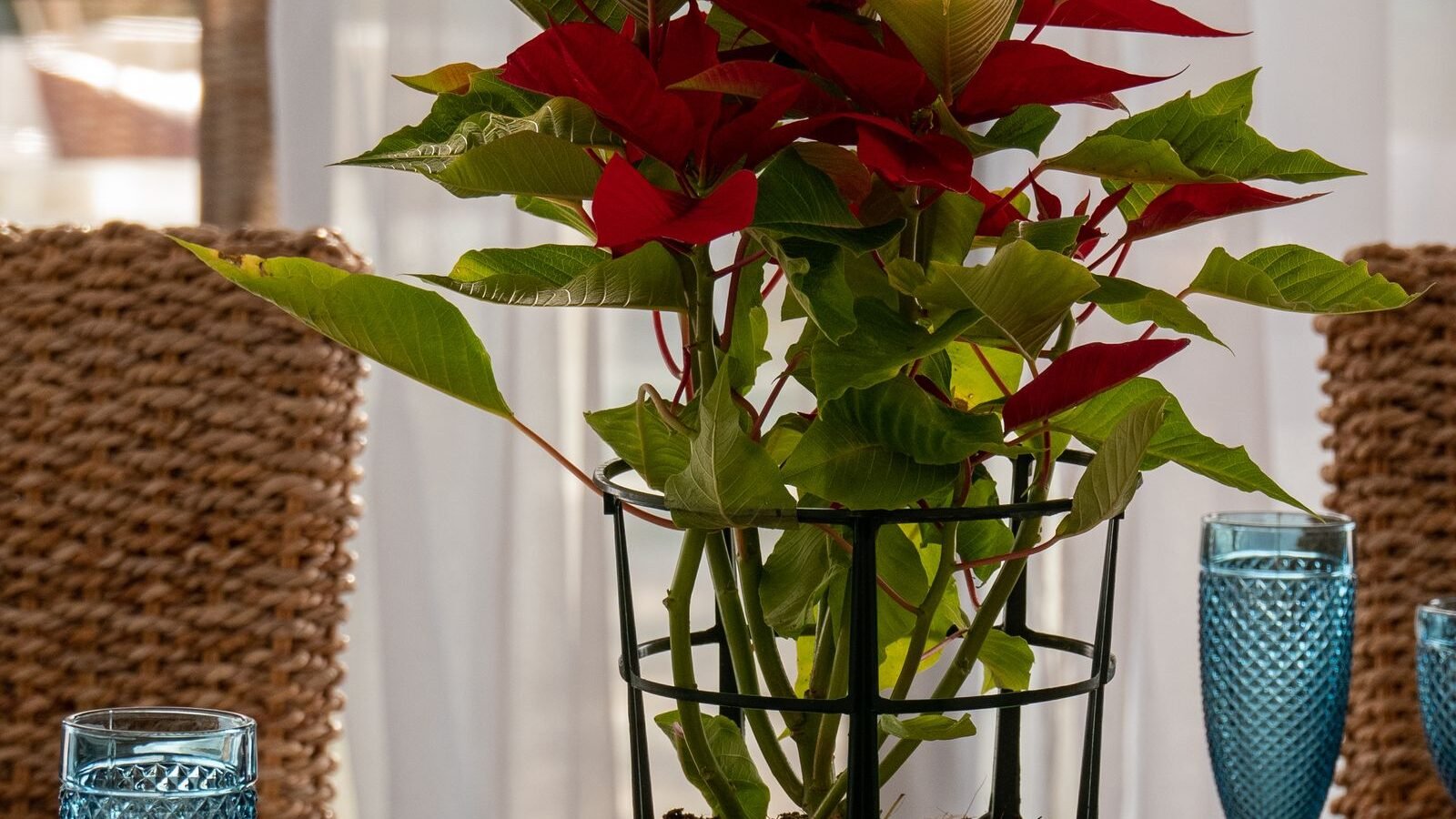
Keep your poinsettia in bright, indirect light, between 60 and 70°F, away from drafts and heaters. Water when the top inch of soil feels dry, and always remove the foil wrapper or poke holes in it so water can drain. Most poinsettias die from wet feet or cold drafts, not neglect.
There is a sad little ritual that plays out in millions of homes every January: the poinsettia that looked so glorious in December is dropping leaves onto the windowsill, and it goes out with the tree. It does not have to. Poinsettias are tropical shrubs from Mexico, and with a few simple adjustments they will stay beautiful well into the new year. With a bit of patience, they can even turn red again next Christmas.
Choosing a healthy poinsettia
Good care starts at the store. Look for:
- Tiny, tight buds in the center. The real flowers are the small yellow-green buttons (called cyathia) in the middle of the colored leaves. If they are still closed or just opening, the plant is fresh. If they have dropped, it has been sitting around for weeks.
- Dense, green leaves right down the stems. Bare lower stems mean it has been stressed.
- No drooping and no soggy soil. Lift the pot. A heavy pot with wet soil in a store sleeve is a warning sign.
On the way home, keep it wrapped. Even a few minutes at below 50°F can damage the leaves.
- Light
- Bright, indirect
- Water
- When top inch is dry
- Temperature
- 60–70°F (16–21°C)
- Humidity
- Average
- Difficulty
- Moderate
- Pets
- Mildly irritating if chewed
Where to put it
A spot near a sunny window where it gets at least six hours of bright, indirect light is ideal. The leaves should not touch cold glass, and the plant should be well away from radiators, fireplaces, heating vents and doors that open to the cold.
Poinsettias hate sudden temperature changes. A plant on a drafty windowsill at night will drop leaves within days. If your window gets cold, pull the plant back a few feet in the evening.
How to water a poinsettia
This is where most poinsettias go wrong. They are almost always sold in a decorative foil or plastic sleeve, which looks festive and traps water at the bottom of the pot. The roots sit in a puddle and rot.
- Remove the sleeve, or poke a few holes in the bottom of it.
- Check the soil daily with a finger. Water when the top inch feels dry to the touch.
- Water at the sink until it runs out of the bottom, let it drain fully, then put it back on a saucer.
- Never let it sit in standing water.
In a warm, bright room that might mean every two to four days. A wilted poinsettia with dry soil recovers quickly after a drink. One with wet soil and wilting leaves is rotting, and needs to dry out.
Wilting with wet soil means too much water, not too little. Watering a drooping poinsettia that is already wet is the most common way to kill it.
Why is my poinsettia dropping leaves?
- Cold drafts or a sudden temperature drop. The number one cause. Move it somewhere stable.
- Overwatering or a waterlogged sleeve. Yellow leaves first, then drop.
- Too little light. Leaves fall slowly over a couple of weeks.
- Too dry. Leaves wilt and curl before they fall.
- Ethylene gas from ripening fruit. Keep it away from the fruit bowl.
Are poinsettias poisonous?
Poinsettias have a scary reputation, but they are much less toxic than their reputation suggests. Their milky sap can irritate the mouth and stomach if a pet or child chews the leaves, causing drooling or mild vomiting, and it can irritate skin. Serious poisoning is very unlikely. Still, if you have a curious cat or a puppy that eats everything, a pet-safe Christmas cactus is the better holiday plant.
Keeping it going after the holidays
Once the colored leaves (they are called bracts) fade, you can enjoy it simply as a green houseplant.
- Late winter: keep watering when dry and give it plenty of light.
- Spring: cut the stems back to about 6 inches tall and start feeding every two to three weeks with a balanced houseplant fertilizer.
- Summer: it can go outside in partial shade once nights stay above 55°F. Pinch the tips of new shoots a couple of times before late summer to keep it bushy.
- Early fall: bring it back in before nights drop below 55°F.
How to make a poinsettia turn red again
Poinsettias are short-day plants. Their bracts color up only after several weeks of long, uninterrupted nights. Starting around October 1, for about 8 to 10 weeks:
- Give the plant 14 hours of complete darkness every night. A closet or a box over the plant from about 5 pm to 7 am works. Even a few minutes of lamp light can reset the clock.
- Give it bright light during the day for the other 10 hours.
- Keep temperatures between 60 and 70°F and keep watering as normal.
By late November or early December you should see color returning. It takes discipline, which is why reblooming a poinsettia feels like a small holiday miracle.
Set a phone reminder for “box on” and “box off”. Missing even a few nights in the first weeks can delay the color.
Poinsettia helpers
Prices change often, so check the store for today's price.Live poinsettia from a garden center or grocery store
A fresh plant with closed yellow buds in the center will last weeks longer than one that has been sitting in a shop. Buy it close to the day you need it, and carry it home wrapped.
- Instant holiday color
- Huge choice of reds, whites and marbled varieties
- Affordable
- Downside: Sensitive to cold on the way home
- Downside: Mildly irritating to pets if chewed
How to use it: Unwrap it at home, set it in bright indirect light away from drafts and water only when the top inch is dry.
Decorative pot cover with drainage saucer
Keeps the festive look without trapping water around the roots. Slip the nursery pot inside and lift it out to water at the sink.
- Prevents root rot
- Looks better than foil
- Reusable every year
- Downside: Choose one slightly larger than the nursery pot
How to use it: Water the plant in its nursery pot, let it drain fully, then put it back in the cover.
FAQ
How long do poinsettias last?
With good care, the colored bracts last six to eight weeks or more. The plant itself can live for years as a houseplant.
Can poinsettias go outside?
Only in warm weather. They are damaged below about 50°F. In frost-free climates like southern Florida and southern California they can grow outdoors as shrubs.
Should I fertilize my poinsettia while it is in color?
No. Wait until spring, after the bracts fade and you have cut it back.
What is the white powder or sticky residue on my poinsettia?
Sticky leaves and tiny white flying insects usually mean whiteflies. Rinse the leaves and use insecticidal soap, repeating every five to seven days.