

To protect plants from frost, act when the forecast drops to 36°F (2°C) or lower on a clear, still night. Water the soil during the day, then cover plants in the late afternoon with frost cloth or an old sheet that reaches the ground. Never let plastic touch the leaves. Move pots against the house, and take covers off by mid-morning once it is above freezing.
The first frost always seems to arrive a week before you expected it. One evening the tomatoes look fine, and the next morning they are black and slumped over.
The good news is that a little planning lets you protect plants from frost for weeks longer, sometimes squeezing out another month of peppers, salad greens and flowers. Most of it costs nothing more than a bedsheet, a hose and 15 minutes before sunset.
Here is when to worry, which plants actually need help, and the methods that make a real difference.
When do you need to protect plants from frost?
Frost forms when surfaces drop to 32°F (0°C) and moisture in the air freezes on them. The catch is that your weather app measures air about 5 feet off the ground. On clear, calm nights, the ground and low leaves can be several degrees colder, so frost can coat plants when the forecast says 36 to 38°F (2 to 3°C).
Clouds and wind work in your favor because they keep heat from escaping. A clear sky, no breeze and a dry day are the classic frost setup. Low spots in the yard collect cold air too, so they frost first.
Use this table to judge how serious tonight’s forecast is.
| Forecast low | What it means | What gets hurt | What to do |
|---|---|---|---|
| 36 to 38°F (2 to 3°C), clear and calm | Frost possible on plants | Basil, impatiens, young seedlings | Cover the most tender plants |
| 29 to 32°F (-2 to 0°C) | Light freeze | Tomatoes, peppers, beans, squash, cucumbers, dahlias | Cover everything tender, water soil first |
| 25 to 28°F (-4 to -2°C) | Moderate freeze | Lettuce, chard, cauliflower, most annual flowers | Double covers, bring pots in, harvest tender crops |
| 24°F (-4°C) and below | Severe freeze | All but the hardiest crops and plants | Harvest what you can, mulch roots, move pots to a garage |
Not sure when frost usually shows up where you live? Our Frost Date Finder gives your average first and last frost by ZIP code. As a rough guide, first frost comes around mid-September in USDA zones 3 and 4, October in zones 5 and 6, late October to mid-November in zones 7 and 8, and December or not at all in zones 9 and warmer.
Which plants need protection (and which don’t)
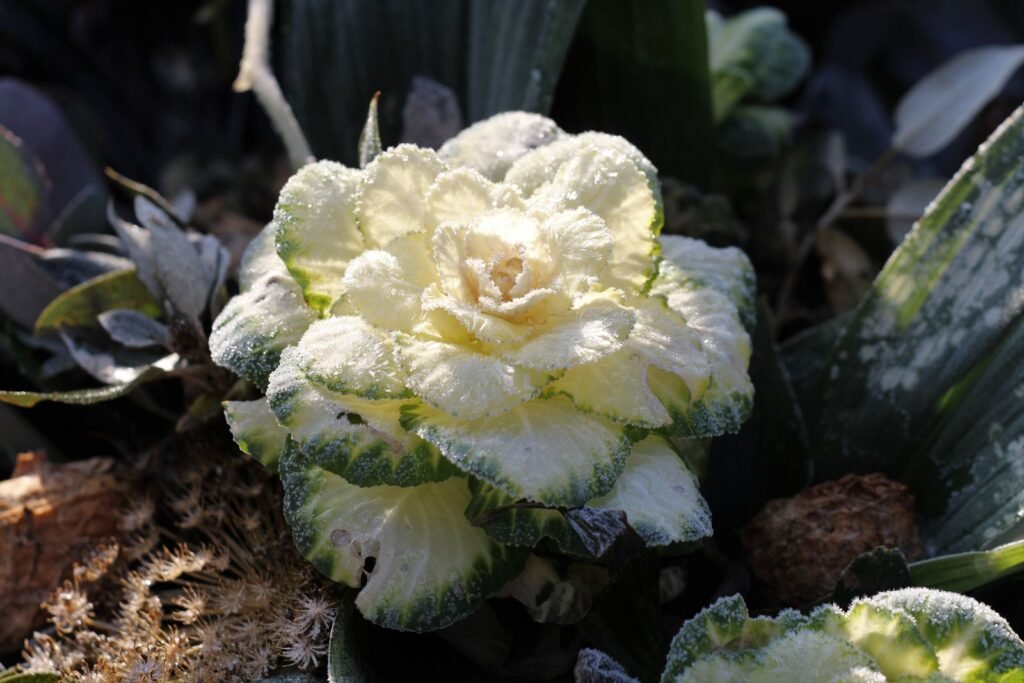
Not every plant needs a blanket. Cool-season crops actually taste sweeter after a light frost, because the plants turn starch into sugar to protect themselves.
Tender: damaged at 32°F (0°C)
Tomatoes, peppers, eggplant, basil, beans, cucumbers, squash, melons, sweet potatoes, sweet corn, zinnias, marigolds, impatiens, coleus, begonias, dahlias, cannas and most houseplants summering outdoors. These need covering the first time frost is forecast.
Frost-tolerant: fine down to about 28°F (-2°C)
Lettuce, chard, beets, carrots, cauliflower, celery, Chinese cabbage, parsnips and potatoes. A light frost is fine, but cover them when a hard freeze is coming.
Hardy: survive below 28°F (-2°C)
Kale, collards, cabbage, Brussels sprouts, broccoli, spinach, turnips, radishes, peas, parsley, onions and garlic. Kale and collards often shrug off nights in the low 20s°F (around -5°C), especially with a row cover. Pansies, violas, mums and ornamental kale are tough too.
Pick the green tomatoes before a freeze. Any tomato showing a blush of color will finish ripening indoors at 55 to 65°F (13 to 18°C). Keep them out of the fridge and check them every couple of days.
How to protect plants from frost: 8 methods that work
1. Water the soil during the day
It sounds backwards, but moist soil holds far more heat than dry soil and releases it slowly overnight, keeping the air right above it a few degrees warmer. Water deeply in the morning or early afternoon so the soil has time to absorb the sun. Skip the leaves and don’t flood the bed.
2. Cover plants in the late afternoon
A cover works by trapping heat that rises from the soil. That only works if the cover goes on before the warmth escapes, so put covers on in the late afternoon or early evening while the ground is still warm, and let them hang all the way to the ground. A cover that stops halfway down a tomato cage is just a hat.
Weigh the edges with bricks, rocks or landscape pins so wind can’t lift them. Old bedsheets, blankets, towels, burlap and cardboard boxes all work in a pinch. Upside-down buckets and plant pots are perfect for small plants.
3. Use frost cloth, not plastic
Frost cloth (also sold as row cover or frost blanket) is a light, white fabric that lets air, water and some light through, so you can leave it on for several days during a cold spell. Lighter weights around 0.5 to 1 oz per square yard add roughly 3 to 5°F of protection, according to University of Georgia Extension. Heavier 1.5 oz fabric gives more but blocks more light, so save it for cold snaps.
Never let plastic touch the leaves. Plastic conducts cold, so the leaves under it can freeze faster than uncovered ones. On a sunny morning it also traps heat and can cook plants. If plastic is all you have, drape it over stakes or hoops with a gap above the plants and remove it early.
4. Build a quick hoop tunnel

For raised beds and rows of greens, a low tunnel is the easiest long-term setup. Bend wire or steel hoops over the bed every 3 to 4 feet, drape frost cloth over the top and clip or pin the sides down. The cover stays off the leaves, and you can flip one side open on warm days.
A tunnel over kale, spinach and lettuce can stretch the harvest well into December in zones 6 and 7. It pairs nicely with the beds in our guide to raised garden bed kits.
5. Mulch around the roots
A 2 to 4 inch layer of shredded leaves, straw or wood chips keeps soil temperatures steadier and protects roots, crowns and bulbs. It matters most for perennials, newly planted shrubs, strawberries and fall-planted garlic. If you are tidying beds this month, our fall garden cleanup guide explains which leaves to keep for mulch.
6. Move containers to shelter
Roots in pots are far more exposed than roots in the ground, so a potted plant can freeze even if the same plant in a bed would be fine. Group containers together against a south- or west-facing wall, under a porch roof or in an unheated garage for the night. Tender plants you want to keep, like geraniums, hibiscus and citrus, should come inside before the first frost. See how to bring plants indoors for winter without bringing pests with them.
7. Add a little gentle heat
On the coldest nights, a small heat source under a cover gives you a few extra degrees. Old-style C7 or C9 incandescent holiday lights put out real warmth (LED strings don’t) and can be wound loosely around a shrub or tomato cage under the fabric. Use outdoor-rated cords and keep bulbs from touching the cloth. Gallon jugs of water left in the sun all day and tucked under the cover at night also release stored heat.
8. Harvest before a hard freeze
When the forecast hits the mid-20s°F (around -4°C), covers may not be enough for summer crops. Pick every pepper, eggplant, bean, squash and tomato worth eating, and pull basil to make pesto. Then focus your covers on the cool-season crops that can keep producing.
What to do the morning after a frost
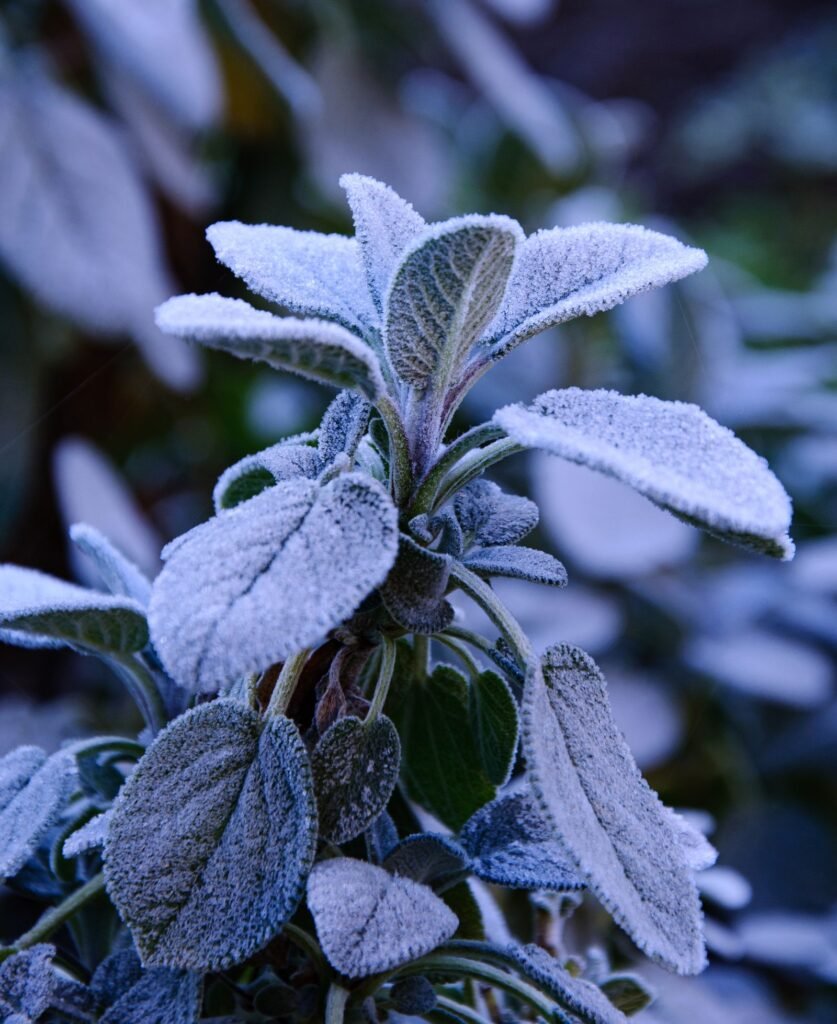
- Take covers off by mid-morning once the temperature is back above 32°F (0°C), so plants get light and don’t overheat. Frost cloth can stay on for a few days during a cold spell.
- Don’t touch frozen leaves. Handling them while icy causes more damage. Let them thaw on their own.
- Wait before pruning. Damaged leaves turn dark and mushy within a day or two. Remove them from annuals and vegetables, but leave them on perennials and shrubs until spring because they help insulate the crown.
- Water if the soil is dry once it thaws, especially before the next cold night.
Unsure whether a frosted plant will bounce back? Describe the symptoms in our Plant Doctor for a quick diagnosis.
Frost tips for the UK, Canada and Australia
UK: first frosts usually arrive between October and November, earlier in Scotland and northern England and later in coastal and urban areas. Fleece, as horticultural frost cloth is called there, is sold at every garden centre.
Canada: frost can come as early as late August or September on the Prairies and in the North, and in October around Toronto and Vancouver. Hoop tunnels with heavier frost cloth are the best way to stretch the season.
Australia: the seasons are flipped, so frost risk runs roughly May to September, peaking in June and July, mostly in inland areas and the tablelands. The same methods apply, and in the Southern Hemisphere the warmest wall for pots is the one facing north.
Best gear to protect plants from frost
Prices change often, so check the store for today's price.Agfabric Warm Worth Frost Blanket Plant Cover (0.95 oz)
A ready-made shrub and plant jacket in light frost fabric with a drawstring at the bottom, so it seals around the base and traps soil warmth without any pinning or weighing down.
- Drawstring closes around the base
- Breathable, so it can stay on for a few days
- Several sizes for shrubs and potted plants
- Downside: Lightweight fabric, double it up for hard freezes
How to use it: Slip it over the plant in the late afternoon and pull the drawstring snug near the ground.
Compare stores — match the model, size, seller and delivery cost.
Search links show store results, not confirmed offers. Prices and availability must be checked at the store.
DeWitt N-Sulate Frost Blanket (1.5 oz)
A heavier frost blanket from a long-running landscape fabric brand. The thicker 1.5 oz fabric holds more heat than lightweight row cover on the coldest nights.
- Heavier fabric for colder nights
- Reusable for many seasons
- Can be cut to fit beds and shrubs
- Downside: Blocks more light, so not for weeks at a time
- Downside: Big rolls are more than a small garden needs
How to use it: Drape it to the ground over beds or shrubs on nights forecast below about 28°F, and remove it once temperatures rise.
Compare stores — match the model, size, seller and delivery cost.
Search links show store results, not confirmed offers. Prices and availability must be checked at the store.
Planket Frost Protection Plant Cover (10 ft round)
A round, reusable cover sized to throw over a shrub, small tree or cluster of potted plants, with a storage bag so it is ready for the next cold night.
- Quick to throw over large plants
- Comes with a storage bag
- Several sizes available
- Downside: Needs weights or clips on windy nights
How to use it: Cover in the evening, weigh the edges at the ground and pull it off mid-morning.
Compare stores — match the model, size, seller and delivery cost.
Search links show store results, not confirmed offers. Prices and availability must be checked at the store.
Agfabric Steel Garden Hoops with Row Cover Kit
Steel hoops and frost cloth together, so you can build a low tunnel over a raised bed or row of greens in a few minutes and keep the fabric off the leaves.
- Keeps fabric off plants
- Easy to vent on warm days
- Reusable each fall and spring
- Downside: Hoop width must match your bed size
How to use it: Space hoops every 3 to 4 feet, drape the cover over and pin or clip the sides to the ground.
Compare stores — match the model, size, seller and delivery cost.
Search links show store results, not confirmed offers. Prices and availability must be checked at the store.
AcuRite Wireless Indoor/Outdoor Thermometer
A wireless outdoor sensor lets you check the real temperature in your garden from the kitchen, and the daily low record shows how cold it actually got near your plants.
- Reads your own yard, not the airport
- Records daily highs and lows
- Widely available and inexpensive
- Downside: Sensor should be shaded for accurate readings
How to use it: Mount the sensor in a shaded spot near the garden, ideally about 3 feet off the ground.
Compare stores — match the model, size, seller and delivery cost.
Search links show store results, not confirmed offers. Prices and availability must be checked at the store.
FAQ
What temperature should I cover my plants?
Cover tender plants when the forecast low is 36°F (2°C) or below, especially on clear, calm nights. Frost can form on leaves even when the air a few feet up is still above freezing.
Can I use a bedsheet to cover plants from frost?
Yes. Cotton bedsheets, blankets and towels work well for a night or two. Drape them so they reach the ground, weigh down the edges and remove them in the morning, since wet fabric gets heavy and can bend stems.
Should I water plants before a frost?
Yes, water the soil during the day before a frost. Moist soil holds more heat than dry soil and releases it overnight. Avoid watering late in the evening or soaking the leaves.
Do I need to cover plants at 40 degrees?
Usually not. At 40°F (4°C), frost is unlikely unless you are in a low spot on a very clear, still night. Tropical houseplants summering outside should come in, though, since many are damaged below 50°F (10°C).
How long can plants stay covered for frost?
Breathable frost cloth can stay on for several days during a cold spell. Sheets and blankets should come off each morning, and plastic should be removed as soon as the sun hits it so plants don’t overheat.
Will plants recover from frost damage?
Hardy and frost-tolerant plants usually recover and push new growth. Tender annuals like basil and tomatoes rarely recover from a hard frost. Wait a few days to see which stems stay firm before cutting anything back.