For most homes, the best grow light for houseplants is a full-spectrum LED that gives off white, natural-looking light, hung 6 to 24 inches above the leaves and run 12 to 14 hours a day on a timer. Our top pick is the Soltech Aspect pendant because it looks like a normal designer lamp. On a budget, a GE Balanced Spectrum BR30 bulb in a lamp you already own works surprisingly well.
Every October the same thing happens. The days get shorter, the sun drops lower, and the monstera that grew a leaf a month all summer suddenly stalls. Stems stretch toward the glass and a few lower leaves turn yellow. Nothing is wrong with your care; there just is not enough light coming through the window.
The best grow lights for houseplants fix that in a weekend, without the purple glow or heat of older setups. We chose these five based on published specs, long-term owner reviews, and how each type of light (bulbs, bars, pendants and clip-ons) works in ordinary living rooms and kitchens. Here is what actually matters and which light suits which home.
What to look for in a grow light for houseplants
Full spectrum, white light
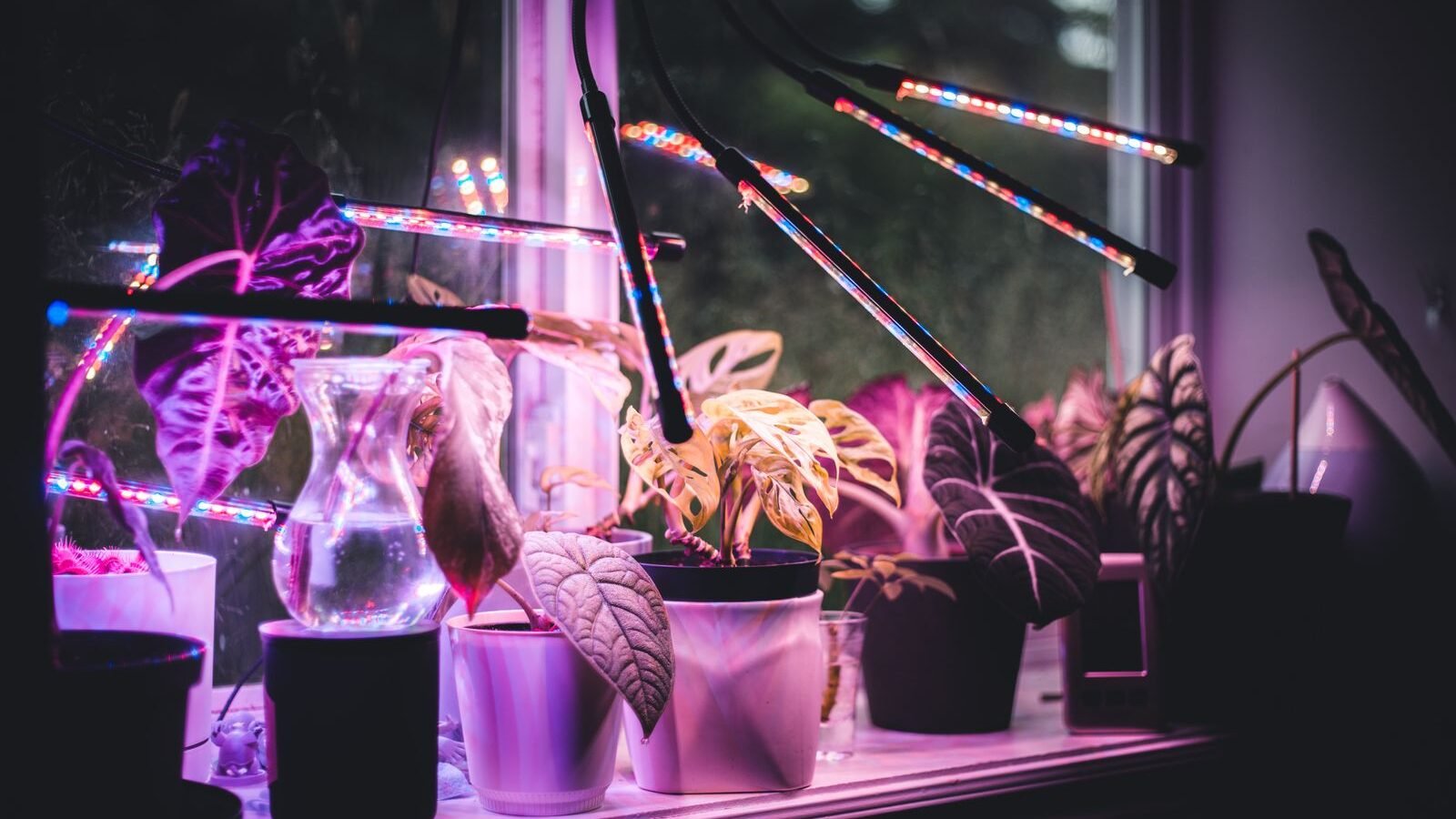
Plants mainly use red and blue light, which is why older grow lights glowed purple. Today’s better LEDs are “full spectrum”: they mix in the whole range so the light looks white or warm white to us while still feeding the plant. For a living room, look for a color temperature between about 3000K (warm, like a regular lamp) and 5000K (crisp daylight). Skip the purple and pink lights unless the plants live in a spare room.
Light intensity in plain English (PPFD)
Watts tell you how much electricity a light uses, not how much your plant gets. The number that matters is PPFD, which simply measures how much usable light lands on the leaves each second. Good brands publish it at a set distance. A rough guide:
- Low-light plants (snake plant, ZZ, pothos): about 50 to 150 PPFD
- Medium-light plants (monstera, philodendron, calathea): about 100 to 250 PPFD
- High-light plants (succulents, cacti, herbs, citrus): 200 to 400 PPFD or more
If a light lists no PPFD at all, treat that as a small warning sign.
Distance: 6 to 24 inches
Light weakens quickly as you move it away. Small bulbs and clip-on lights work best 6 to 12 inches above the leaves. Stronger bulbs and strips do well at 12 to 18 inches, and pendants and panels can hang 18 to 24 inches up or more. Closer is stronger, but too close can bleach leaves.
Hours and a timer
Most houseplants are happy with 12 to 14 hours of grow light a day in winter. Plants need a dark period too, so do not leave lights on 24/7. A built-in timer, or a cheap plug-in outlet timer, is the single feature that decides whether you will actually stick with it.
Bulb, bar, panel or clip-on?
- Bulbs screw into a lamp you already own. Cheapest and most discreet.
- Bars and strips (T5 style) are ideal for shelves, plant stands and seed starting.
- Panels throw a lot of light over a big area, but look like grow-tent gear.
- Clip-ons with goosenecks suit one or two plants on a desk or shelf.
- Pendants hang from the ceiling and look like real lighting, which matters in a living room.
How it looks in your home
A light you hate looking at will get unplugged by Thanksgiving. Where you relax, choose warm white light and a fixture that looks like a lamp.
Do the shadow test. At midday, hold your hand a foot above the leaves under the light. A crisp, sharp shadow means bright light; a faint, fuzzy shadow means low light. It is a quick way to check whether your setup matches the plant.
Our top 5 grow lights for houseplants
The 5 best grow lights for houseplants
Prices change often, so check the store for today's price.Soltech Solutions Aspect LED Pendant Grow Light
The grow light for people who do not want their living room to look like a greenhouse. The Aspect is a matte aluminum pendant that gives off warm white light, so guests see a designer lamp, not a plant light. It comes in a smaller 20-watt and a larger 40-watt size, hangs on a long fabric cord, and covers a large plant or a cluster of medium ones from above.
- Looks like real home lighting
- Warm white light that is easy on the eyes
- Height-adjustable cord
- Black or white finish
- Covers a big floor plant from overhead
- Downside: Costs far more than a bulb or strip
- Downside: Ceiling hook or stand needed
- Downside: Takes a bit of trial and error to set the hanging height
How to use it: Hang it about 18 to 26 inches above the top leaves (closer for the small size, higher for the large), plug it into an outlet timer and run it 12 to 14 hours a day.
Compare stores — match the model, size, seller and delivery cost.
Search links show store results, not confirmed offers. Prices and availability must be checked at the store.
GE Grow Light LED BR30 Bulb, Balanced Spectrum (Seeds and Greens)
A 9-watt bulb from a name you know that screws into any standard E26 lamp socket. The balanced spectrum looks close to normal white light, so a floor lamp or desk lamp you already own becomes a grow light for a few dollars.
- Very affordable
- Works in lamps you already have
- Natural-looking light
- Long rated lifespan
- Downside: Modest output, so it needs to sit fairly close
- Downside: Lights one or two plants, not a whole shelf
How to use it: Put it in an adjustable lamp 6 to 12 inches above the plant and run it on a timer for 12 to 14 hours a day.
Compare stores — match the model, size, seller and delivery cost.
Search links show store results, not confirmed offers. Prices and availability must be checked at the store.
Barrina T5 LED Grow Light Strips, 2 ft (5000K white)
Barrina’s linkable T5 bars are a favorite among houseplant collectors for lighting whole shelves, and they come in packs so you can line every level of a bookcase or plant stand. Choose the 5000K white version for living spaces rather than the pinkish full-spectrum one.
- Lights a whole shelf evenly
- Bars link together with one plug
- Mounting clips and ties included
- Choice of white or pinkish full spectrum
- Downside: Shows bare tubes, so best tucked under a shelf
- Downside: No built-in timer, so add an outlet timer
How to use it: Mount the strips under the shelf above, 6 to 12 inches over the leaves, and run them 12 to 14 hours a day.
Compare stores — match the model, size, seller and delivery cost.
Search links show store results, not confirmed offers. Prices and availability must be checked at the store.
SANSI 24W LED Grow Light Bulb (BR30, 4000K)
The bulb to choose when a GE bulb is not quite enough, for a big monstera, a fiddle leaf fig or a pot of herbs. SANSI publishes its numbers, about 177 PPFD at 1 foot, and uses a ceramic heat sink so the bulb runs cool and lasts.
- Much stronger than a standard grow bulb
- Natural 4000K daylight color
- Fits regular E26 sockets
- Five-year US warranty
- Downside: Bright, so not ideal right at eye level
- Downside: Larger than a normal bulb, so check your lampshade
How to use it: Use it in a clamp lamp or floor lamp 12 to 18 inches above the plant, angled down, on a 12-hour timer.
Compare stores — match the model, size, seller and delivery cost.
Search links show store results, not confirmed offers. Prices and availability must be checked at the store.
GooingTop LED Clip-On Grow Light (6000K full spectrum)
An inexpensive gooseneck lamp that clips to a shelf, desk or table edge and points right where you need it. It has a built-in timer and dimming, which makes it a simple, set-and-forget way to help a single plant or a few succulents through winter.
- Built-in auto on/off timer
- Dimmable
- Flexible gooseneck
- Very affordable
- Downside: Covers only a small area
- Downside: Clip and plastic build feel basic
How to use it: Clip it to the shelf or table, bend the head to 6 to 12 inches above the plant and set the 12-hour timer.
Compare stores — match the model, size, seller and delivery cost.
Search links show store results, not confirmed offers. Prices and availability must be checked at the store.
Quick comparison
| Light | Type | Light color | Best distance | Best for |
|---|---|---|---|---|
| Soltech Aspect | Pendant | Warm white | 18–26 in. | Living rooms, big floor plants |
| GE Balanced Spectrum BR30 | Bulb | Natural white | 6–12 in. | Tight budget, one or two plants |
| Barrina T5 strips | Bars | White (5000K) | 6–12 in. | Shelves and plant stands |
| SANSI 24W BR30 | Bulb | Daylight (4000K) | 12–18 in. | Big plants, herbs, succulents |
| GooingTop clip-on | Clip-on | Daylight (6000K) | 6–12 in. | Desks and small spaces |
How to set up a grow light
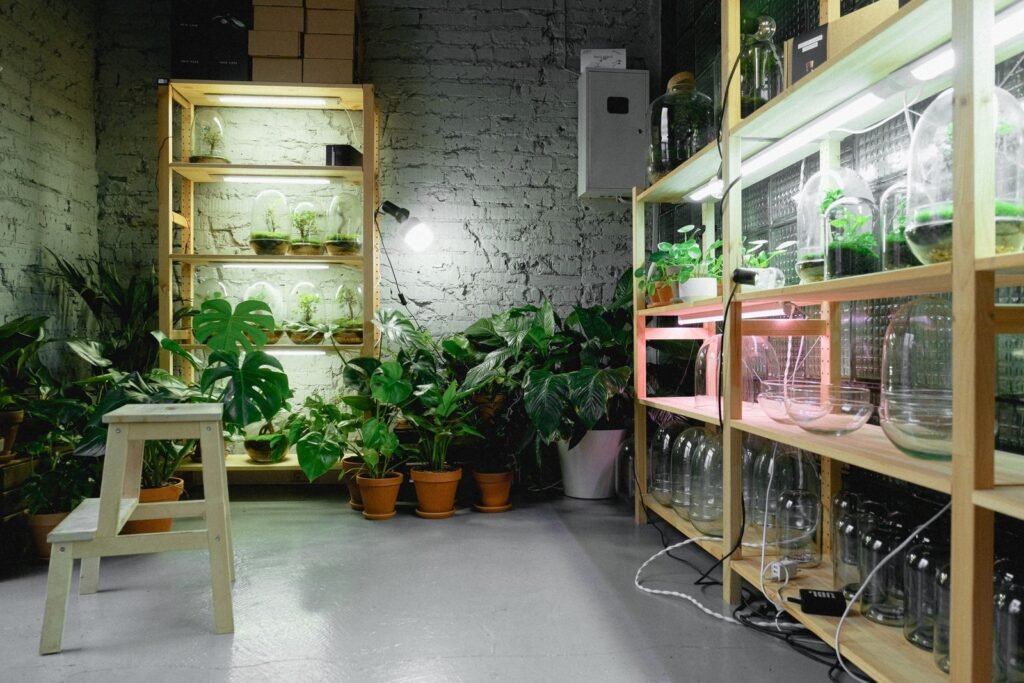
- Group the plants. One light over three plants is far more efficient than three lights over three scattered plants.
- Start high, then lower. Begin at the top of the recommended range for your light and lower it a couple of inches each week until growth looks compact and healthy.
- Set a timer for 12 to 14 hours. Match it to your day, for example 7 a.m. to 8 p.m., so the light is on when you are home and off when you sleep.
- Keep using the window. A grow light adds to daylight, it does not replace it. A bright window plus a light is the winning combination.
- Rotate pots every week or two so all sides get light evenly.
- Water a little more often. Plants under lights grow and drink more than plants sitting dormant in a dim corner. Keep checking the soil rather than following the calendar.
Signs of too little light
Stretched, leggy stems, small new leaves, plants leaning toward the light, and older leaves turning pale or yellow. Move the light closer or add hours. If yellowing continues, our guide to yellow leaves on plants helps you rule out watering.
Signs of too much light
Bleached, washed-out or crispy patches on the leaves facing the light, curling leaf edges, or soil drying out in a day or two. Raise the light a few inches or cut back to 12 hours.
Do not stare into high-output grow lights, and keep bare bulbs out of direct eye level in rooms where kids play. Angle them down at the plants, and use a shade or a fixture that hides the bulb where possible.
Outside the US
In the UK, Canada and the northern US, winter light is weakest from November to February, so that is when a grow light helps most. Buy the local voltage version (E27 bulbs and 220–240V plugs in the UK and Australia). In Australia, spring is under way, so you may only need a light for a dark apartment or a south-facing room (the shady side down under).
Which plants benefit most?
Big, leafy tropicals that stall in winter, like monstera and fiddle leaf fig, show the biggest difference (our monstera care guide explains why). Herbs and succulents that stretch in winter respond fast too. For lettuce and basil, an all-in-one system with a built-in light is easier; see our hydroponics for beginners guide.
FAQ
Do LED grow lights really work for houseplants?
Yes. A full-spectrum LED placed at the right distance gives houseplants the light they need to keep growing through winter. The two most common mistakes are hanging it too far away and running it without a timer.
How far should a grow light be from houseplants?
Usually 6 to 24 inches. Small bulbs and clip-ons work best at 6 to 12 inches, stronger bulbs and strips at 12 to 18 inches, and pendants or panels at 18 to 24 inches or more. Check the maker’s PPFD chart if there is one.
How many hours a day should I leave a grow light on?
12 to 14 hours a day suits most houseplants. Plants need a dark period, so never run grow lights around the clock. Succulents and herbs can take up to 16 hours.
Do grow lights use a lot of electricity?
No. Most of the lights here use between 9 and 40 watts. A 24-watt bulb running 12 hours a day uses under 9 kilowatt-hours a month, which works out to a dollar or two at typical US electricity rates.
What color grow light is best for houseplants?
Full-spectrum white light between 3000K and 5000K works for almost all houseplants and looks natural in a living space. Purple or pink lights grow plants just as well but are harsh to live with.