Hydroponics grows plants in water with dissolved nutrients instead of soil, with a light providing the “sun”. For a beginner, the easiest start is a countertop smart garden with a built-in light and timer: add water and nutrients, drop in seed pods, and you can be snipping basil in about four to six weeks.
There is something almost magical about picking fresh basil in January while snow piles up outside. Hydroponics makes that possible in a corner of the kitchen, with no soil, no mess and, in the simplest systems, almost no skill required.
It sounds technical, but at heart hydroponics is just three ingredients: water, nutrients and light. Get those right and plants often grow faster indoors than they would in the garden, because they never have to search for food or water.
How hydroponics works
In soil, roots spend energy pushing through dirt to find water and nutrients. In a hydroponic system, the roots hang in (or are regularly bathed in) water that already contains everything the plant needs. A small air pump or a gap above the water gives the roots oxygen, and an LED light above provides the energy for growth.
The result: compact plants, quick harvests and a setup that fits on a countertop.
The main types of systems
- Countertop smart gardens. All-in-one units with a water tank, pre-seeded pods and an adjustable LED light on a timer. The easiest place to start, and what most people mean by “indoor herb garden”.
- Kratky method. A jar or bucket of nutrient water with a plant suspended above it in a net cup. No pumps, no electricity except the light. Cheap and surprisingly effective for lettuce and herbs.
- Deep water culture (DWC). Roots sit in an aerated tank of nutrient water. Great for bigger leafy plants.
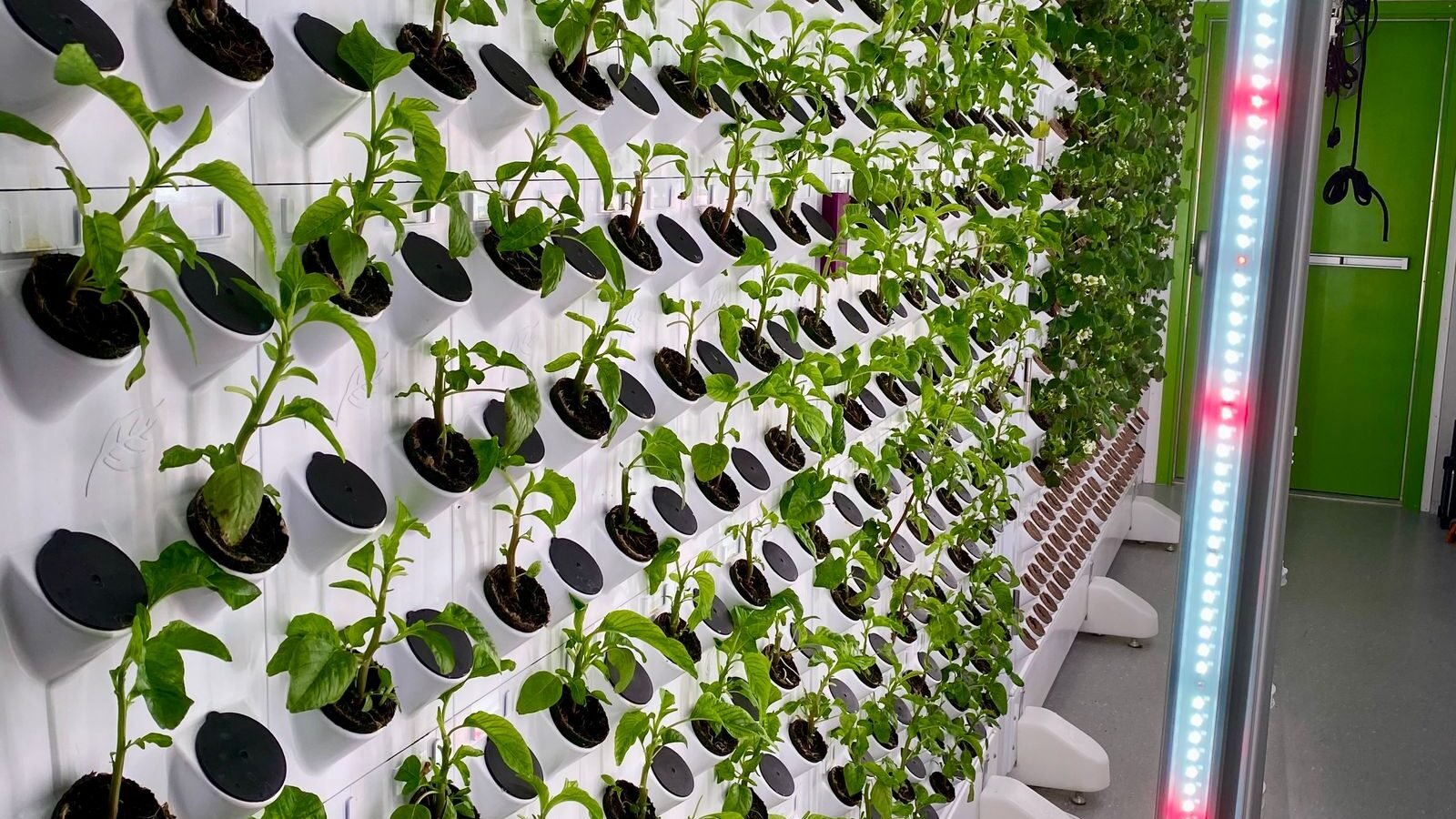
- Vertical towers. Water is pumped to the top and trickles down past many plants. Huge harvests in a small footprint, but more expensive and a bit more maintenance.
Start small and simple. A 6 to 12 pod countertop garden teaches you everything you need to know. Most people who start with an expensive tower and no experience give up when something goes wrong.
What to grow first
Some plants are practically made for beginner hydroponics:
- Basil. The undisputed champion. Fast, forgiving and wildly productive. Genovese and Thai basil both do well.
- Lettuce and salad greens. Ready in four to six weeks, and you can cut and come again.
- Parsley, cilantro and dill. Slower to start but very rewarding.
- Mint. Grows like crazy. Give it its own pod or it takes over.
- Cherry tomatoes and peppers. Possible in larger units with tall lights, but wait until you have one successful herb harvest first.
Setting up your first garden, step by step
- Pick the spot. A flat counter near an outlet, away from direct sun (which can cause algae in the tank).
- Fill the tank with room-temperature tap water. Let tap water sit out overnight first if your water is heavily chlorinated.
- Add nutrients exactly as the instructions say. Most kits include them.
- Insert the seed pods, remove any labels and put the little clear domes on top to keep seeds humid while they sprout.
- Set the light timer for 14 to 16 hours a day. Most smart gardens do this automatically.
- Remove the domes once seedlings touch them, usually in 7 to 14 days.
- Raise the light as plants grow, keeping it a few inches above the tallest leaves.
Keeping it healthy
- Top up the water whenever the indicator drops. Plants drink more as they grow.
- Add nutrients on schedule, usually every two weeks.
- Change the water completely every three to four weeks to prevent salt build-up and algae.
- Harvest often. Pinch basil just above a pair of leaves. Regular trimming makes it bushier, stops it flowering and keeps it from shading neighbors.
Do not let the tank run dry. Roots in hydroponic systems have no soil to buffer them, so a few days without water can kill a whole garden. Check the water level every couple of days.
Common beginner problems
- Seeds not sprouting: some pods are slow (parsley can take three weeks). Keep the domes on and the light running. Replace pods that show nothing after four weeks.
- Leggy, floppy seedlings: the light is too high. Lower it closer to the plants.
- Yellowing leaves: usually missed nutrient doses or old water. Do a full water change and feed.
- Green slime in the tank: algae from light reaching the water. Cover empty pod holes and clean the tank.
- Brown, slimy roots with a bad smell: root rot from warm, stale water. Clean everything, change the water and keep the unit away from heat.
Is hydroponics worth it?
If you cook with herbs, yes. A pot of supermarket basil often costs a few dollars and wilts in days, while a single basil pod in a smart garden can keep you supplied for months. Add the sheer pleasure of watching something grow in winter, and most people find it pays for itself in happiness long before it does in money.
Our top 5 indoor hydroponic gardens
Prices change often, so check the store for today's price.Click & Grow Smart Garden 9
The simplest, most beginner-proof smart garden. Pre-seeded plant pods use a smart soil that releases nutrients on its own, so there is nothing to measure. Its clean, minimalist design looks good on any counter.
- Almost no setup or maintenance
- No liquid nutrients to measure
- Quiet, with no pump
- Wide range of pre-seeded pods
- Downside: Works best with the brand's own pods
How to use it: Fill the tank, drop in the pods, plug it in. Top up water every 3–4 weeks.
AeroGarden Harvest Lite
AeroGarden made countertop hydroponics popular, and the Harvest Lite is its easy, affordable entry model with six pods and an automatic light.
- Very easy to start
- Huge range of compatible seed pods
- Compact footprint
- Downside: Light height limits it to herbs and greens
How to use it: Fill with water, add the nutrients included, insert pods and let the built-in timer handle the light.
LetPot LPH-SE 12-pod smart garden
A 12-pod garden with Wi-Fi app control that can tell you when water is low, a handy feature if you travel or tend to forget.
- App alerts for water level
- Twelve pods for herbs and greens
- Adjustable light height
- Downside: App setup takes a few minutes
How to use it: Connect it to the app first, then plant your pods and let the schedule run.
12-pod hydroponic garden with remote (budget)
Many budget 12-pod systems come from the same few factories and work much the same. They are a low-risk way to find out whether you enjoy hydroponics.
- Very affordable
- Twelve pods
- Adjustable LED height
- Downside: Build quality varies by brand
- Downside: Smaller water tank
How to use it: Buy one with good recent reviews and a water-level window, and follow the same setup steps.
Gardyn Home Kit 4.0
A tall vertical system that grows up to 30 plants in about two square feet, with cameras and an app that monitors your plants. A big step up for serious indoor growers.
- Huge harvest in a small footprint
- App and camera monitoring
- Looks striking in a room
- Downside: Expensive
- Downside: Ongoing cost for plant pods and membership options
How to use it: Best for households that eat a lot of greens and want a real indoor garden rather than a few herbs.
FAQ
Do hydroponic herbs taste as good as soil-grown?
Yes, when they get enough light and nutrients. Many people find hydroponic basil sweeter and more tender because it never gets stressed.
How much electricity does a countertop garden use?
Very little. Most small units use LED lights rated around 10 to 30 watts, running about 14 to 16 hours a day.
Can I use my own seeds?
Yes. Most systems sell empty “grow anything” pods you can fill with any seed.
Is hydroponic gardening safe for pets?
The units themselves are safe. Just check that the herbs you grow are pet-safe if your cat likes to nibble: basil is non-toxic, while mint can upset cats and dogs.