Plant tulip bulbs in fall once the soil has cooled below about 60°F (16°C), usually 6 to 8 weeks before the ground freezes. In most of the US that means October to November. Set them pointy end up, about 6 to 8 inches deep and 4 to 6 inches apart. In zones 8 to 10, chill the bulbs in the fridge for 10 to 14 weeks first.
Knowing when to plant tulip bulbs is most of the battle. Tulips are about as easy as flowers get: dig a hole, drop in a bulb, walk away for five months. But they need a long, cold winter to bloom, and they need to go in at the right moment. Too early and they may sprout in a warm spell. Too late and the roots never settle in before the ground freezes.
Luckily the window is wide and forgiving. Here is how to time it for your zone, plant properly, and keep the squirrels off your investment.
When to plant tulip bulbs in your zone
Plant when soil temperature at planting depth drops below 60°F (16°C), about 6 to 8 weeks before your ground usually freezes. If your nights are regularly in the 40s°F (around 4 to 9°C), you are almost always in the window.
Tulips need roughly 12 to 16 weeks of cold to bloom well. Northern winters provide that; southern ones do not, which is why warm-zone gardeners chill bulbs in the fridge first.
| USDA zone | When to plant | Pre-chill needed? |
|---|---|---|
| Zones 3–4 | Mid-September to early October | No |
| Zone 5 | Late September to late October | No |
| Zone 6 | October to early November | No |
| Zone 7 | Late October to late November | No |
| Zone 8 | November to early December | Helpful in 8b, often skipped in 8a |
| Zone 9 | Late December to early January | Yes, 10–14 weeks in the fridge |
| Zone 10 | Late December to mid-January | Yes, 10–14 weeks; treat as annuals |
Missed the window? Plant them anyway. As long as you can still dig the soil, tulips planted in December, even early January in milder zones, will usually still flower, just a little later and a little shorter. Bulbs left in the bag until spring will not.
Pre-chilling tulips in warm zones (8–10)
Put the bulbs in a paper bag or mesh bag (not sealed plastic, which traps moisture and causes mold) in the crisper drawer of your fridge at 35 to 45°F (2 to 7°C). Leave them for 10 to 14 weeks, starting around mid-October, then plant straight from the fridge into cool soil. Expect flowers about 4 to 6 weeks later.
Keep chilling bulbs away from fruit. Apples, bananas and other ripening fruit give off ethylene gas, which can kill the flower bud inside the bulb. Use a fridge drawer with no produce in it, or a spare fridge in the garage.
UK, Canada and Australia
- UK and Ireland: plant in late October to November. The RHS and most growers like November, because colder soil helps prevent tulip fire, a fungal disease.
- Canada: most of the country plants from mid-September to mid-October, a couple of weeks before the ground freezes. Coastal BC can wait until November.
- Australia: seasons are flipped, so tulips go in during late autumn, around late April to May, once the soil has cooled. In warmer areas, chill the bulbs in the crisper for about 6 weeks before planting. Bulbs bought in spring (now, in October) need storing somewhere cool and dry until then.
The timing is almost identical to garlic, so if you are already planting cloves, see our guide on how to plant garlic in fall and do both on the same weekend.
Choosing good tulip bulbs
A big, healthy bulb already has next spring’s flower formed inside it, so quality matters.
- Go for size. Bigger bulbs (often sold as 12 cm or “jumbo”) give bigger flowers and taller stems.
- Squeeze them. Good bulbs feel firm and heavy, like a small onion. Skip anything soft, shriveled or moldy. Torn papery skins are fine.
- Buy early. The best varieties sell out by mid-October. Store bulbs somewhere cool, dry and airy until planting.
Tulips that come back: Darwin hybrids
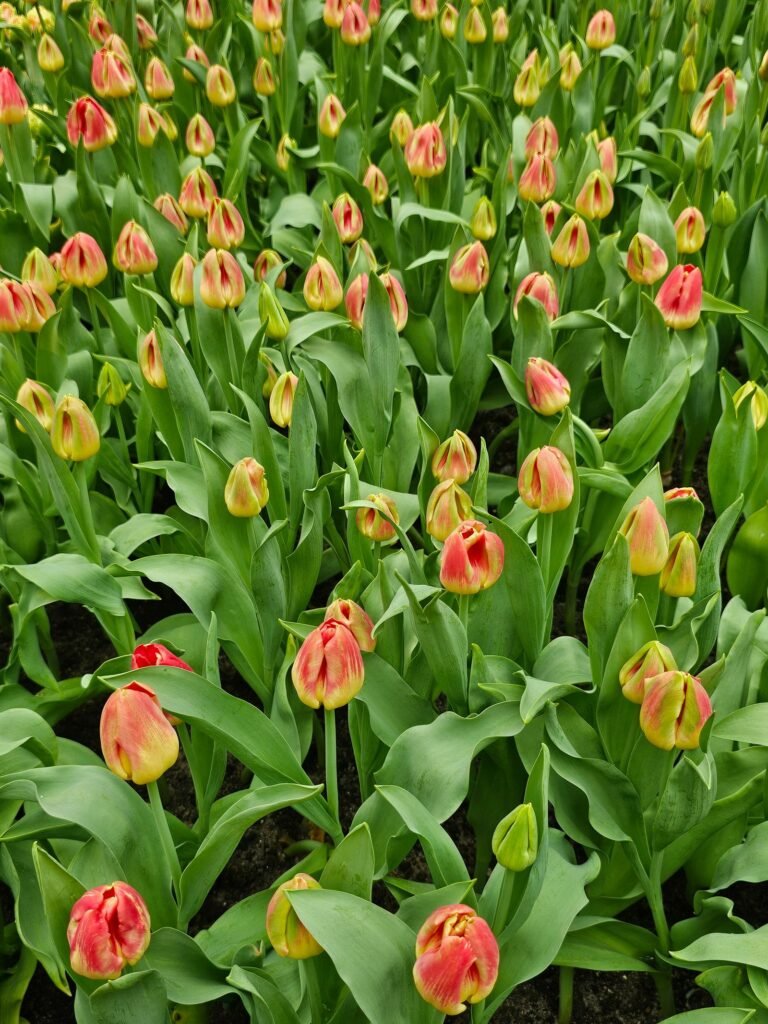
Most tulips bloom beautifully the first year and then fade. For tulips that return for several years, choose Darwin hybrids such as ‘Apeldoorn’ and ‘Pink Impression’. Species tulips like Tulipa tarda and Tulipa clusiana, plus Fosteriana and Greigii types, are also reliable in sunny, well-drained spots.
Where to plant tulips
Sun
Tulips want full sun, at least 6 hours a day in spring. They bloom before most trees leaf out, so a bed under deciduous trees often works. In hot southern gardens, afternoon shade makes the flowers last longer.
Drainage
The one thing tulips will not forgive is soggy soil, which rots bulbs over winter. If puddles stand for hours after rain, plant elsewhere or build up the soil. A raised bed is perfect; see our raised garden bed kits guide. In heavy clay, mix in a few inches of compost.
How deep and how far apart to plant tulip bulbs
Plant tulips about three times as deep as the bulb is tall. For a typical 2 to 2.5 inch bulb, that works out to 6 to 8 inches deep, measured from the base of the bulb to the soil surface. Go toward 8 inches in sandy soil, cold zones, or anywhere squirrels are a problem. Deeper planting also helps tulips come back in later years.
Space bulbs 4 to 6 inches apart, or about 2 inches for a packed, full display. Groups of 10 to 15 bulbs of one variety look far better than a single long row.
How to plant tulip bulbs, step by step
- Prepare the soil. Loosen it to about 12 inches deep and work in compost if it is heavy or poor.
- Dig the holes or one wide trench. A bulb auger on a cordless drill makes quick work of dozens of holes. For a big clump, dig one wide hole 8 inches deep.
- Add bulb food. Sprinkle a bulb fertilizer such as Bulb-tone into the bottom and mix it into the loose soil, following the label rate.
- Set the bulbs pointy end up. If you cannot tell which end is which, lay the bulb on its side. It will find its way up.
- Backfill and firm gently with your hands to remove big air pockets.
- Water well to settle the soil and trigger root growth.
- Mark the spot with a label so you do not dig through them later.
Watering after planting
Soak the bed right after planting so water reaches below the bulbs. After that, water only if fall is very dry, about once a week until the ground freezes, then leave them alone. Too much water is a bigger risk than too little. In zones 3 to 6, a 2 to 3 inch layer of shredded leaves after the ground starts to freeze keeps soil temperatures steady.
Protecting tulip bulbs from squirrels and voles
Squirrels dig up fresh plantings (loose soil and the smell of bone meal draw them in), and voles tunnel in from below. What actually works:
Use hardware cloth
Lay 1/2 inch galvanized hardware cloth over the planted area, just under the mulch, and pin the edges down. Shoots grow straight through the holes in spring. For voles, line the planting hole with a hardware cloth basket so bulbs are enclosed on the sides and bottom too.
Plant deep and clean up
Plant at 8 inches, pick up the papery skins, and firm the soil well. A tidy, settled bed attracts far less digging.
Mix in daffodils
Squirrels, voles and deer leave toxic daffodils alone. Mixing them in among tulips often reduces damage.
Planting tulips in containers (lasagna planting)
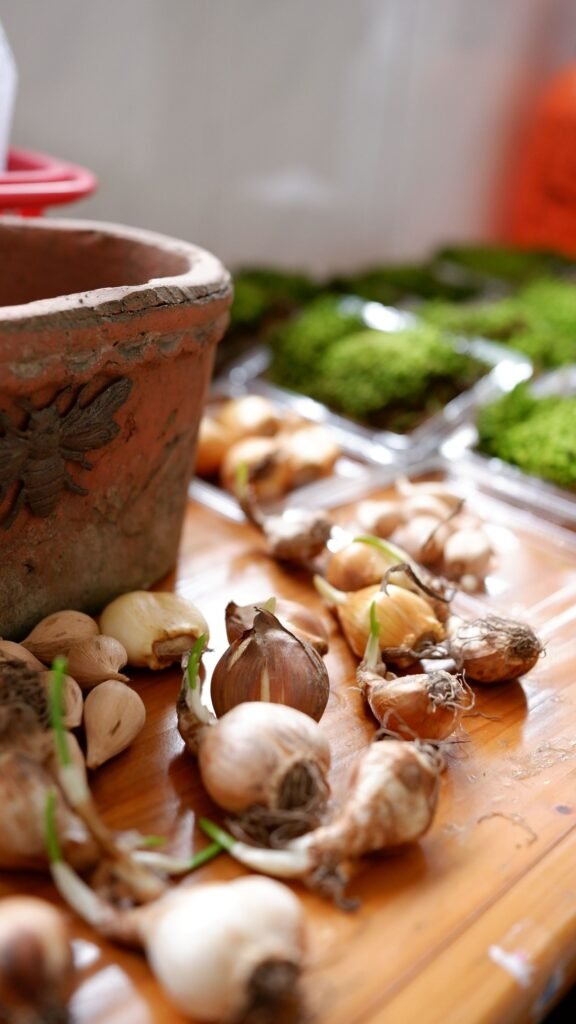
Tulips do beautifully in pots on patios and in small backyards. Use a pot at least 12 inches deep with a drainage hole and regular potting mix, set bulbs almost touching, and cover with about 4 inches of mix.
For a spring-long show, try lasagna planting: tulips on the bottom, 2 inches of mix, a layer of daffodils or hyacinths, more mix, then small bulbs like grape hyacinth or crocus on top. Each layer blooms in turn from March to May.
In zones 6 and colder, pots freeze solid, so move them into an unheated garage or shed for winter and water lightly about once a month.
What to do after tulips bloom
Snap off faded flower heads so the plant does not waste energy on seeds. Then leave the leaves alone until they yellow and flop over, about 6 weeks after flowering, because they are feeding next year’s bulb. Cutting them early is the main reason tulips do not come back.
Are tulips toxic to cats and dogs?
Yes. The ASPCA lists tulips as toxic to cats, dogs and horses. The bulb holds the most toxins, so dogs that dig up and chew bulbs are most at risk. Symptoms include vomiting, drooling and diarrhea. Hardware cloth protects both the bulbs and the dog. Call your vet if you think your pet has eaten one.
Tools and bulbs for planting tulips
Prices change often, so check the store for today's price.Power Planter 3 x 7 in. Bulb & Bedding Plant Auger
Turns your cordless drill into a hole-digging machine. Planting 50 tulips by hand takes an afternoon; with this auger it takes about 20 minutes, and your wrists will thank you.
- Made in the USA and very sturdy
- Fits any 3/8 in. or larger drill
- Digs clean holes up to about 6 in. deep in one pass
- Downside: Struggles in rocky or root-filled soil
- Downside: Needs a reasonably powerful drill
How to use it: Drill straight down, pull up to clear soil, then go back in for the last couple of inches to reach full tulip depth.
Compare stores — match the model, size, seller and delivery cost.
Search links show store results, not confirmed offers. Prices and availability must be checked at the store.
Edward Tools Bulb Planter
A simple step-on bulb planter with depth markings on the barrel and a squeeze handle that releases the plug of soil, so you can drop in a bulb and refill the hole in seconds.
- Depth markings for consistent planting
- Soil-release handle
- No battery needed
- Downside: Hard work in heavy clay
- Downside: One hole at a time
How to use it: Push down to the 6 to 8 inch mark, lift out the soil plug, drop in the bulb and release the soil back on top.
Compare stores — match the model, size, seller and delivery cost.
Search links show store results, not confirmed offers. Prices and availability must be checked at the store.
Van Zyverden Darwin Hybrid Tulip Mixture
Darwin hybrids are the tulips most likely to return year after year, and this mixed set of large bulbs gives a cheerful spread of colors on tall, sturdy stems.
- Darwin hybrids perennialize better than most tulips
- Large, mammoth-size bulbs
- Widely available
- Downside: Mixed colors, so you cannot pick the exact shades
- Downside: Stock sells out by late fall
How to use it: Plant in groups of 10 or more, 6 to 8 inches deep, in full sun with good drainage.
Compare stores — match the model, size, seller and delivery cost.
Search links show store results, not confirmed offers. Prices and availability must be checked at the store.
Espoma Organic Bulb-tone 3-5-3
An organic, slow-release feed made for bulbs. It is gentle enough to mix into the planting hole, and a light top dressing each fall keeps perennial tulips blooming.
- Organic and slow-release
- Made specifically for bulbs
- Easy to measure
- Downside: Its smell can attract digging animals, so firm the soil well
- Downside: Results are gradual
How to use it: Mix a small amount into the bottom of each hole at planting, then scatter over the bed each fall at the label rate.
Compare stores — match the model, size, seller and delivery cost.
Search links show store results, not confirmed offers. Prices and availability must be checked at the store.
Amagabeli 1/2 in. Galvanized Hardware Cloth
The most reliable way to stop squirrels and voles from raiding your bulbs. Tulip shoots grow straight through the 1/2 inch mesh in spring, but paws and teeth cannot get in.
- Long-lasting galvanized steel
- Works against squirrels, voles and chipmunks
- Reusable for years
- Downside: Sharp cut edges, so wear gloves
- Downside: Takes a few minutes to cut and pin
How to use it: Lay flat over the planted bed just under the mulch and pin it down, or form small baskets around bulbs in vole country.
Compare stores — match the model, size, seller and delivery cost.
Search links show store results, not confirmed offers. Prices and availability must be checked at the store.
FAQ
What month is best to plant tulip bulbs?
For most of the US, October and November. Northern zones 3 to 5 plant from late September, while warm zones 9 and 10 plant pre-chilled bulbs in late December or early January.
Is it too late to plant tulip bulbs in December?
Usually not. If you can still dig the soil, plant them. They may bloom a little later and shorter, but bulbs kept in the bag until spring will dry out and fail.
Should I soak tulip bulbs before planting?
No. Tulips do not need soaking and can rot if they sit wet. Just plant them in moist soil and water well afterward.
Do tulips come back every year?
Many modern hybrids fade after the first year. Darwin hybrids and species tulips come back far more reliably, especially when planted deep in sunny, well-drained soil with the leaves left to die back naturally.
Which way up do you plant tulip bulbs?
Pointy end up, flat root plate down. If you really cannot tell, plant the bulb on its side and it will right itself.
Can I plant tulip bulbs in pots?
Yes. Use a pot at least 12 inches deep with drainage, plant bulbs close together under about 4 inches of mix, and protect the pot from hard freezes in cold zones.