Start bringing plants indoors for winter when night temperatures stay below 50 to 55°F (10 to 13°C), well before the first frost. Inspect and rinse each plant, treating identified pests with an appropriate labeled product if needed, keep it apart from your other houseplants for 2 weeks, give it your brightest window, and water less than you did in summer. Some yellowing and leaf drop in the first few weeks is normal.
Bringing plants indoors for winter is one of those fall jobs that looks simple until a hibiscus drops half its leaves, the kitchen fills with tiny flies, and your favorite fern turns out to have brought a few hundred spider mites with it. The plants are fine outdoors all summer. It is the move that causes the trouble.
The fix is a little preparation: start early, clean every plant before it crosses the threshold, and then adjust light and watering for the darker months. Here is the whole process, step by step.
When to start bringing plants indoors for winter
Most tropical houseplants start to sulk when nights drop below about 50°F (10°C), and some, like hibiscus, crotons and many tropicals, can show damage below 55°F (13°C), long before frost. So the real signal is not the first frost warning. It is the first week when nights stay consistently in the low 50s°F.
In much of the northern US and Canada, that is mid-September to early October. In zones 8 and warmer it may not happen until November. Watch the 10-day forecast and plan to move plants over a week or two rather than on one panicked night.
Bring plants in before you turn the heat on. The shift from cool, humid fall air to warm, dry indoor air is a big shock. Moving them while the house is still unheated gives them a gentler landing.
- UK: most tender plants come in by late September to mid-October, before the first frosts.
- Canada: often early to mid-September in the Prairies and East; later on the BC coast.
- Australia: the seasons are flipped, so this job happens in April and May as autumn cools. Right now, in October spring, it is time to move overwintered plants back outside, gradually.
Which plants to bring in (and which to leave out)
Tropical houseplants
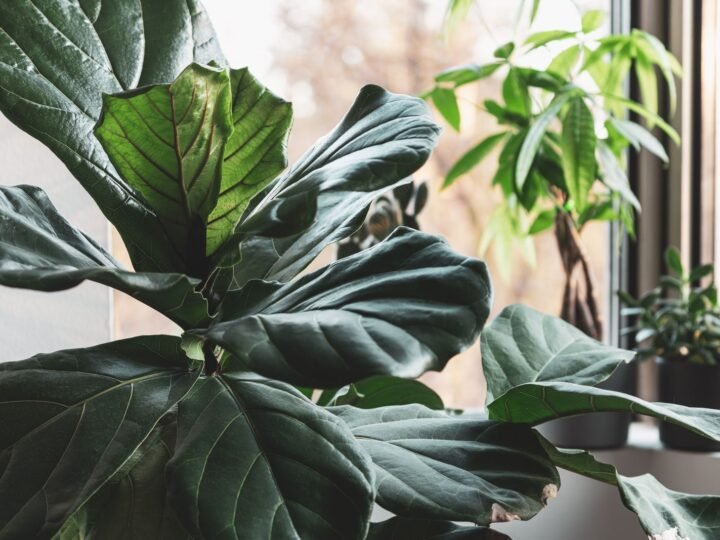
Anything that summered on a porch, such as monstera, pothos, philodendron, ferns, peace lilies, palms and ficus, needs to come in. These cannot handle any frost at all. If you have a monstera, see our monstera care guide for its winter needs.
Herbs like rosemary
Rosemary is hardy outdoors to roughly zone 7 or 8 (Arp is a little hardier), but in colder zones it needs to come in. It is one of the trickier plants to overwinter: give it your sunniest, coolest window and never let the root ball dry out completely. Bay laurel and lemongrass also come in. Basil hates cold and usually does better started fresh indoors.
Geraniums
Zonal geraniums (pelargoniums) can come in as potted plants for a sunny window, or be stored dormant in a cool basement (see below). Either way, move them before a hard frost.
Citrus
Meyer lemons, limes and calamondins can handle cool nights, but bring them in once nights drop to about 45 to 50°F (7 to 10°C). They need your brightest light all winter.
Tropical hibiscus
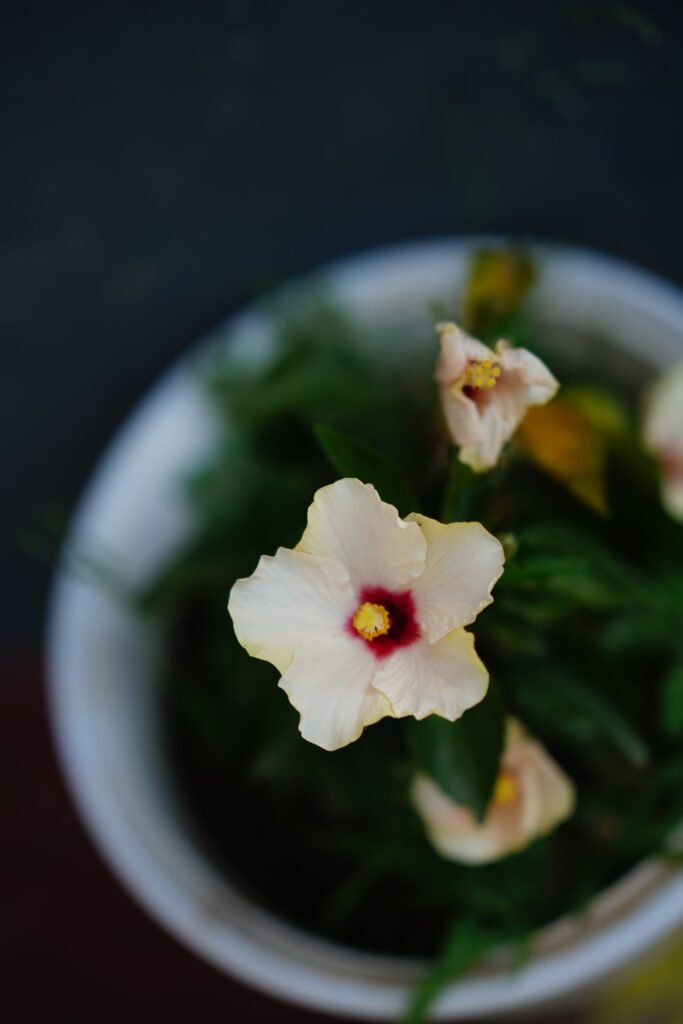
Tropical hibiscus is famous for dropping leaves after the move. Bring it in when nights fall below 50°F, give it full sun, and expect it to look rough for a few weeks.
What to leave outside
Hardy perennials, shrubs and trees in pots that are rated at least two zones colder than yours can stay out (move them against a wall or into an unheated garage). Annuals like petunias and impatiens are usually not worth the effort; take cuttings instead. Plants that need winter cold, such as spring bulbs and hardy fruit trees, should stay outside.
Winter care at a glance
| Plant | Bring in when nights fall below | Winter spot | Winter watering |
|---|---|---|---|
| Tropical houseplants | 50–55°F (10–13°C) | Bright, away from heaters | When top 2 in. are dry |
| Tropical hibiscus | 50°F (10°C) | Sunniest window | When top inch is dry |
| Citrus (Meyer lemon) | 45–50°F (7–10°C) | Sunniest suitable window or grow light | When top 2 in. are dry |
| Rosemary | About 30°F (-1°C) in cold zones | Cool, very sunny window | Keep lightly moist, never bone dry |
| Geraniums (potted) | Before frost | Sunny window, cool room | Sparingly |
| Geraniums (dormant) | Before frost | Paper bag, 45–50°F basement | None |
How to debug plants before bringing them in
This is the step that saves you a winter of pest problems. Do it outside, about a week before the move.
- Inspect every plant. Check the undersides of leaves, leaf joints and new growth for webbing, sticky residue, tiny moving dots or white fluff. Tip the pot and look at the drainage hole too.
- Hose it down. A firm spray of water knocks off aphids, spider mites and a lot of dust. Hit the undersides of leaves.
- Soak the pot. For small and medium pots, submerge the whole pot in a bucket or tub of water for 15 to 20 minutes. Slugs, ants, earwigs and pill bugs will crawl out. Let it drain well afterward.
- Treat identified pests if needed. Insecticidal soap works by contact on susceptible pests. Check that the label permits use on your plant and indoors, test a small area, and follow the label for coverage and repeat intervals. Do not apply automatically to every plant.
- Quarantine for 2 weeks. Once inside, keep the newcomers in a separate room or at least a few feet from your other houseplants, and check them every few days.
Spray in the shade, not in hot sun. Insecticidal soap and neem oil can scorch leaves in direct sun or above about 90°F (32°C). Test on a few leaves first, wait a day, and avoid spraying sensitive plants like ferns heavily.
Acclimate plants gradually
Plants grown in full outdoor sun have leaves built for bright light. Moving them straight into a dim room triggers leaf drop. Ease the transition: for a week or two before the move, shift them into partial shade on the porch, then bring them in for nights, then for good. It is the same “hardening off” you do in spring, in reverse.
Light: give them the best seat in the house
Winter light indoors is a fraction of summer light outside, and it is the biggest reason plants struggle.
Use your brightest window
In the Northern Hemisphere, a south-facing window is often a good starting point for sun lovers like citrus, rosemary, hibiscus and geraniums. In Australia and other Southern Hemisphere locations, look first at north-facing windows; buildings, trees and glazing can change the actual light. East and west windows suit most foliage plants. Keep leaves from touching cold glass on frosty nights.
Add a grow light
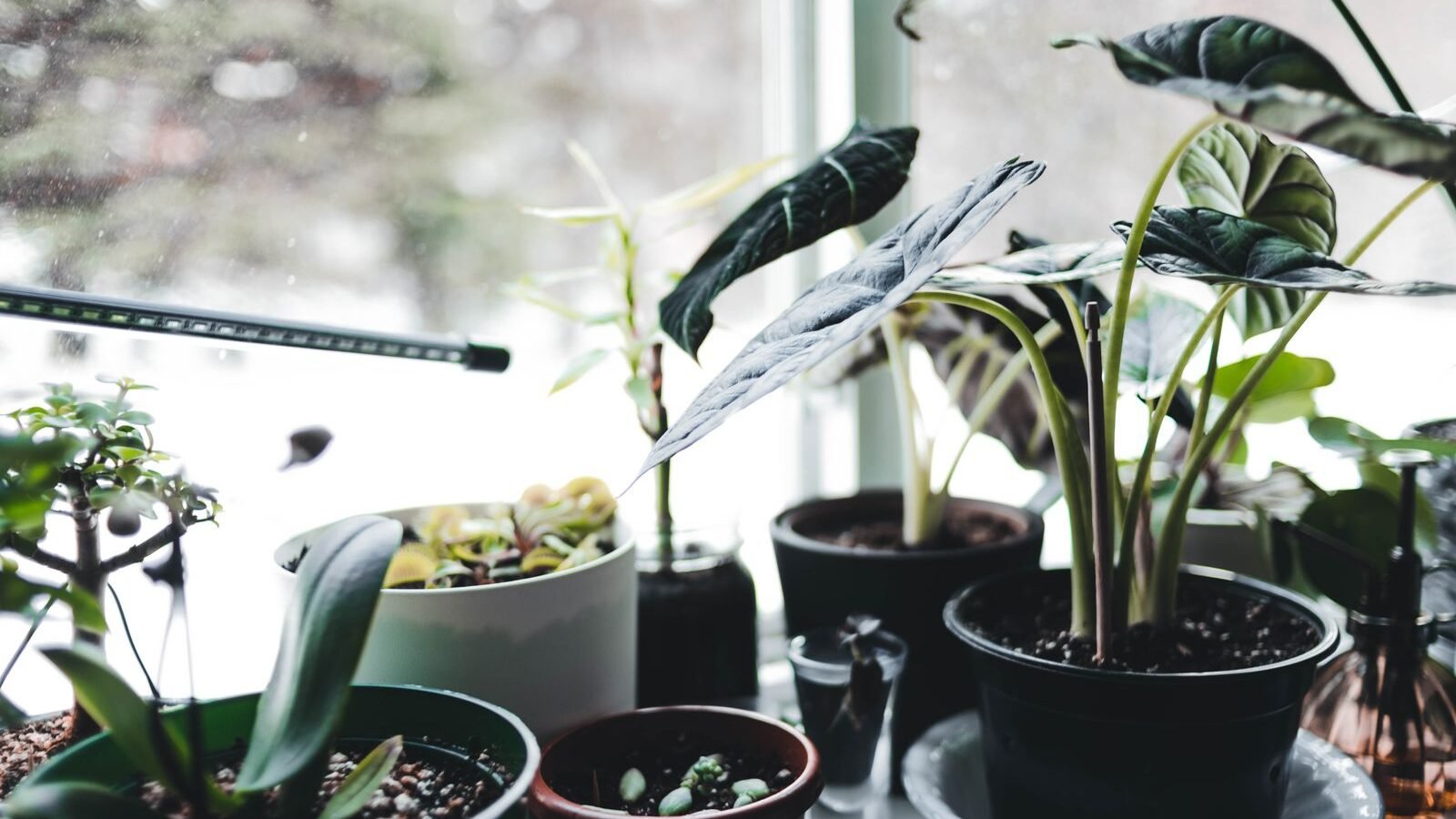
If you lack sunny windows, a full-spectrum LED grow light is a game changer. A simple screw-in grow bulb in a desk or clamp lamp, 12 to 18 inches above the plant for 12 to 14 hours a day, keeps rosemary and citrus going through the darkest months.
Water less, and add humidity
Plants grow much more slowly in winter, so they use far less water. Watering on your summer schedule is the fastest way to cause root rot and yellow leaves. Check the soil with your finger and water only when the top inch or two is dry. Skip fertilizer until spring for most plants.
Heated homes often drop below 30 percent humidity, which leads to crispy leaf edges and spider mites. Group plants together, set pots on a tray of pebbles and water (the pot sits on the pebbles, not in the water), or run a small humidifier nearby. Keep plants away from heating vents, radiators and drafty doors.
Expect some leaf drop
Almost every plant drops some leaves after the move, especially ficus, hibiscus and citrus. It is a normal reaction to lower light: the plant sheds leaves it can no longer support. As long as new growth looks healthy and the stems stay firm, it will settle within 3 to 6 weeks. Don’t keep moving it around or overwatering to “help.” If the leaf drop continues or spreads, our free Plant Doctor can help narrow down the cause.
Pests to watch for this winter
Spider mites
Fine webbing, tiny pale speckles on leaves, and a dull, dusty look. They love warm, dry air. Rinse affected plants, isolate them and identify the pest before choosing a treatment. If using insecticidal soap, follow the product label and inspect again for new activity.
Fungus gnats
Tiny black flies hovering around the soil. Their larvae live in damp potting mix, so overwatering in winter makes them explode. Let the top inch or two of soil dry out and use yellow sticky traps. Our full fungus gnats guide covers every fix.
Aphids
Small green, black or white soft-bodied insects clustered on new growth, often with sticky honeydew. Wipe or rinse them off and follow up with insecticidal soap.
How to overwinter geraniums dormant
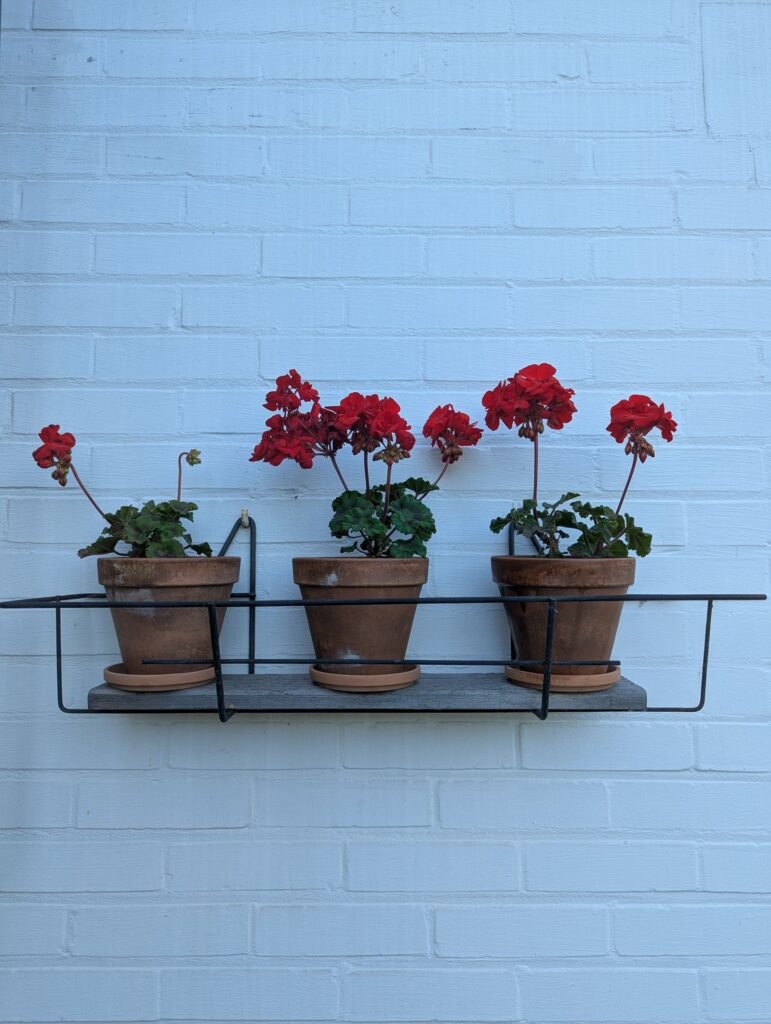
If you have no sunny window to spare, store geraniums the old-fashioned way:
- Dig them up before the first frost and shake off all the soil from the roots.
- Put one or two plants in a paper bag, or hang them upside down.
- Store them somewhere cool and dry, around 45 to 50°F (7 to 10°C), such as a basement or unheated (but frost-free) room. Leaves will dry and drop, which is fine.
- In March, cut them back to firm, green stems, pot them in fresh mix, water and put them in a sunny window or under a grow light.
- Plant out after your last frost.
Some plants will not survive storage, so overwinter a few more than you need, or take cuttings as a backup.
What makes the move easier
Prices change often, so check the store for today's price.Safer Brand Insect Killing Soap (32 oz. ready-to-use)
The simplest, gentlest way to debug plants before they come inside. It kills soft-bodied pests like aphids, spider mites, mealybugs and whiteflies on contact, and it is safe to use on most houseplants.
- Ready to spray, no mixing
- Gentle on most houseplants
- Works on the most common hitchhiking pests
- Downside: Only kills pests it touches, so coverage matters
- Downside: Repeat intervals depend on the label
How to use it: Use only for pests and plants listed on the local product label. Test a small area and follow the label for application and repeat intervals.
Compare stores — match the model, size, seller and delivery cost.
Search links show store results, not confirmed offers. Prices and availability must be checked at the store.
Bonide Captain Jack's Neem Oil (32 oz. ready-to-use)
A multi-purpose spray that tackles insects, mites and some fungal problems like powdery mildew, which is handy for rosemary that tends to get mildew indoors.
- Insecticide, miticide and fungicide in one
- Ready to use
- Good on mites and mildew
- Downside: Strong smell for a day or two
- Downside: Can scorch sensitive leaves in sun or heat
How to use it: Test on a few leaves first, then spray thoroughly in the shade or in the evening. Repeat every 7 to 14 days as the label directs.
Compare stores — match the model, size, seller and delivery cost.
Search links show store results, not confirmed offers. Prices and availability must be checked at the store.
GE Grow Light LED BR30 (Balanced Spectrum)
A full-spectrum grow bulb that screws into any standard lamp and gives off a natural-looking white light. An easy way to rescue sun-loving plants stuck in a dim winter room.
- Fits a regular E26 lamp socket
- Natural white light, not purple
- Low energy use
- Downside: Covers one or two plants, not a whole shelf
- Downside: You need a lamp or clamp fixture
How to use it: Put it in a clamp or desk lamp 12 to 18 inches above the plant and run it 12 to 14 hours a day on a timer.
Compare stores — match the model, size, seller and delivery cost.
Search links show store results, not confirmed offers. Prices and availability must be checked at the store.
Gideal Dual-Sided Yellow Sticky Traps
Indoor heat plus damp winter soil is a recipe for fungus gnats. These traps catch adult gnats and whiteflies and show you right away if a newcomer brought pests in.
- Inexpensive and non-toxic
- Twist ties included
- Doubles as a pest monitor
- Downside: Only catches adults, not larvae
- Downside: Can stick to leaves and pets
How to use it: Stake one in each pot of new arrivals during quarantine and replace when covered.
Compare stores — match the model, size, seller and delivery cost.
Search links show store results, not confirmed offers. Prices and availability must be checked at the store.
Rolling plant caddy with locking wheels (12 in.)
Big citrus trees and hibiscus in large pots are heavy. A caddy lets you roll them inside, chase the winter sun from window to window, and roll them back out in spring without hurting your back.
- Saves your back
- Easy to move toward light
- Protects floors
- Downside: Adds a few inches of height
- Downside: Check the weight rating for very large pots
How to use it: Set the pot on the caddy outside before the move, roll it in, and lock the wheels once it is in place.
Compare stores — match the model, size, seller and delivery cost.
Search links show store results, not confirmed offers. Prices and availability must be checked at the store.
FAQ
When should I bring my potted plants inside for the winter?
When night temperatures stay below about 50 to 55°F (10 to 13°C). For most of the northern US that is mid-September to early October, well before the first frost.
How do I get rid of bugs on plants before bringing them inside?
Inspect leaves and pots, hose the plant down, soak the pot in water for 15 to 20 minutes to flush out soil pests, treat identified pests with an appropriate product according to its label, and keep the plant away from other houseplants for 2 weeks.
Why are my plants dropping leaves after bringing them inside?
Mostly lower light. Plants shed leaves they cannot support in dimmer indoor conditions. Give them your brightest spot, water less, and new growth should follow within a few weeks.
Should I repot plants before bringing them indoors?
Usually not. Repotting adds stress on top of the move. Wait until spring, unless the plant is badly root-bound or has a pest problem in the soil.
How often should I water plants indoors in winter?
Less than in summer, often half as often. Check the soil and water only when the top inch or two is dry.
Sources and local conditions
See University of Minnesota Extension: bringing houseplants inside for inspection and acclimation, and Iowa State University Extension: overwintering geraniums for storage options. Their seasonal examples describe a northern US climate. Use your local forecast, plant hardiness and local spring dates; Australian seasons are reversed.