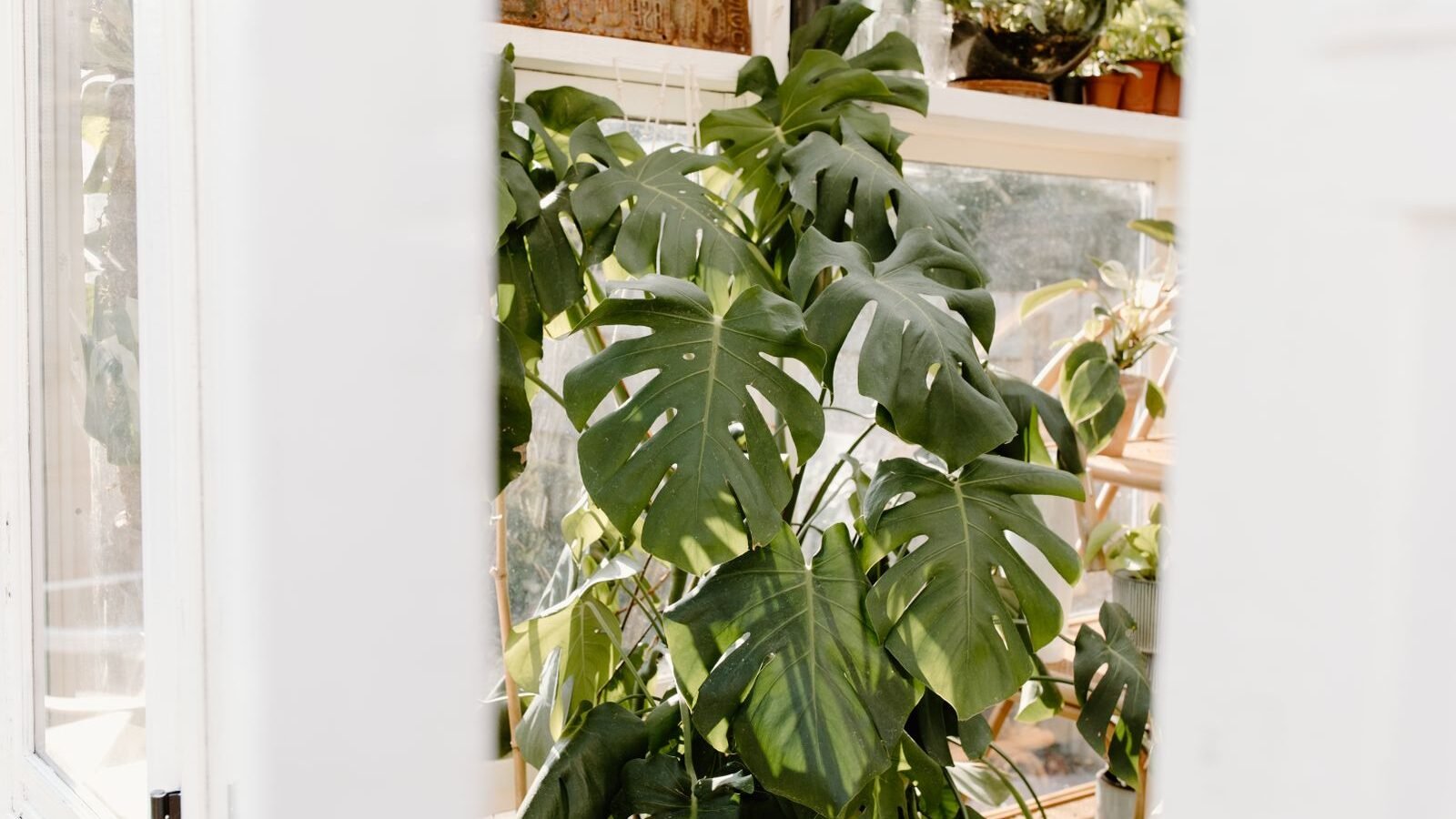
Give your monstera bright, indirect light within a few feet of a window, water only when the top 2 inches of soil are dry, and keep it between 65 and 85°F. Most yellow leaves come from watering too often, not too little.
Monsteras have a way of taking over a room. One spring you bring home a modest plant with three heart-shaped leaves, and by the following summer it is leaning across the sofa with leaves the size of dinner plates, each one cut with those famous splits. When it is happy, it is one of the most generous plants you can own.
When it is unhappy, it tells you just as clearly: yellow leaves, brown crispy edges, new leaves that come out small and solid with no holes at all. The good news is that monsteras are forgiving. Almost every problem traces back to one of four things: light, water, soil or humidity. Get those right and the rest takes care of itself.
- Light
- Bright, indirect
- Water
- When top 2 in. are dry
- Temperature
- 65–85°F (18–29°C)
- Humidity
- 40% or higher
- Difficulty
- Easy
- Pets
- Toxic to cats & dogs
How much light does a monstera need?
More than most people think. In the rainforest, monsteras climb trees toward the canopy, so they are built for bright, dappled light. Indoors, the sweet spot is within about 3 feet of an east or west window, or a few feet back from a south-facing one.
A simple test: at midday, hold your hand a foot above a leaf. If it casts a soft but clear shadow, the light is good. If you can barely see a shadow, the plant is too far from the window.
- Too little light: long, stretched stems, small new leaves and no splits.
- Too much direct sun: pale, bleached or scorched patches, usually on leaves facing the glass.
If your home is dark, a full-spectrum LED grow light 12 to 18 inches above the plant for 12 hours a day makes a remarkable difference. It is the single biggest upgrade for a monstera that refuses to grow.
Splits (fenestrations) need maturity and light. Young plants and plants in dim corners grow solid leaves. Move it closer to the window, give it something to climb, and the next leaves usually arrive with more holes.
How often should you water a monstera?
Forget the calendar. The right rhythm depends on your light, your pot and the season, so the only reliable method is to check the soil. Push a finger in up to the second knuckle. If it feels dry at that depth, water. If it still feels damp, wait a few days and check again.
When you do water, water thoroughly: pour slowly until water runs out of the drainage hole, let it drain, then empty the saucer. A monstera that gets a big drink and then dries out partway will always do better than one that gets a splash every few days.
In a bright spot in summer that might mean every 7 to 10 days. In winter, with less light and slower growth, it can stretch to two or even three weeks.
No drainage hole, no monstera. A decorative pot without a hole traps water at the bottom where you cannot see it, and the roots slowly rot. Keep the plant in a plastic nursery pot with holes and slip that inside the decorative one.
The best soil and pot for a monstera
Monsteras want soil that holds a little moisture but lets air reach the roots. Regular bagged potting mix on its own is too dense and stays wet too long. A simple, reliable recipe:
- Two parts quality indoor potting mix
- One part orchid bark
- One part perlite
That chunky texture is the difference between a plant that sulks and a plant that pushes out a new leaf every few weeks in summer. When the roots start circling the pot or poking out of the bottom, usually every 18 to 24 months, move up just one pot size, about 2 inches wider.
Why are my monstera leaves turning yellow?
Yellow leaves are the most common monstera complaint, and they almost always point to one of these causes:
- Overwatering. Several leaves yellowing at once, soil that stays damp for more than a week, sometimes tiny flies around the pot. This is the cause in most cases. Let the soil dry out and check the drainage.
- One old leaf at the bottom. Perfectly normal. Plants retire their oldest leaves as they grow. Snip it off at the base.
- Not enough light. Pale yellowing combined with slow, leggy growth.
- Hungry plant. If it has been in the same soil for two years and has not been fed, older leaves fade evenly. Feed every four weeks in spring and summer.
Not sure which one it is? Our free Plant Doctor walks you through it in three taps.
Brown edges and crispy tips
Brown, dry edges usually mean the air is too dry or the plant went too long between waterings. Heating and air conditioning can drop indoor humidity below 30 percent, which is very dry for a rainforest plant.
Group your plants together, keep the monstera away from heaters and air vents, and consider a small humidifier in winter. Trim the brown edges with clean scissors, following the natural shape of the leaf.
Brown spots with yellow halos are different. They often mean wet soil combined with low light, so treat them like overwatering.
Give it something to climb
In nature, monsteras climb. A moss pole or a sturdy wooden plank pushed into the pot lets the plant grow upward instead of sprawling, and climbing plants tend to produce bigger, more mature leaves. Tie the main stem loosely to the pole with soft plant ties and guide the aerial roots (those brown cords) toward it.
Feeding and cleaning
Feed with a balanced liquid houseplant fertilizer at half strength every four weeks from spring to early fall, and stop in winter. Every month or so, wipe the leaves with a damp cloth. Dust blocks light, and big leaves collect a surprising amount of it.
Helpful for monstera care
Prices change often, so check the store for today's price.XLUX Soil Moisture Meter
The easiest way to stop overwatering. Push the probe into the root zone and read dry, moist or wet in seconds. No batteries, nothing to set up.
- Ends the guesswork on watering
- Long probe reaches big pots
- Very affordable
- Downside: Readings are a guide, not lab-precise
How to use it: Push it about two-thirds of the way down the pot, halfway between the stem and the edge. Water when it reads in the dry zone.
Coco coir moss pole
Gives your monstera something to climb so it grows up instead of out. Climbing plants tend to produce larger leaves with more splits.
- Encourages mature leaves
- Saves floor space
- Extendable versions grow with the plant
- Downside: Needs tying in as the plant grows
How to use it: Push it in next to the main stem when you repot, then tie the stem loosely to it every few inches.
Full-spectrum LED grow light
Turns a dim corner into a spot a monstera can thrive in. Choose one with a built-in timer so it runs 12 hours a day without you thinking about it.
- Faster, fuller growth in low light
- Timer models are set-and-forget
- Low running cost
- Downside: Adds another cable to the room
How to use it: Position 12–18 inches above the top leaves and run it for about 12 hours a day.
FAQ
Is monstera toxic to cats and dogs?
Yes. Monstera contains calcium oxalate crystals that irritate the mouth and stomach if chewed. It is rarely serious, but keep it out of reach of pets that nibble plants. The ASPCA plant list is a good place to check any plant.
Should I mist my monstera?
Misting raises humidity for only a few minutes, so it does little on its own. Grouping plants and using a humidifier works much better.
Why is my monstera not making holes in its leaves?
Usually not enough light, or the plant is still young. Move it closer to a window, add a moss pole and be patient. Mature, well-lit plants split reliably.
How fast does a monstera grow?
In good light during spring and summer, expect a new leaf every 4 to 6 weeks. Growth slows right down in winter, which is normal.