A fiddle leaf fig dropping leaves is usually reacting to change: a move, a cold draft or a big shift in light. If the dropped leaves have brown spots or the soil stays wet, overwatering and root rot are the likely cause. Give it bright, steady light, water only when the top 2 inches of soil are dry, keep it at 65 to 80°F (18 to 27°C), and then stop moving it.
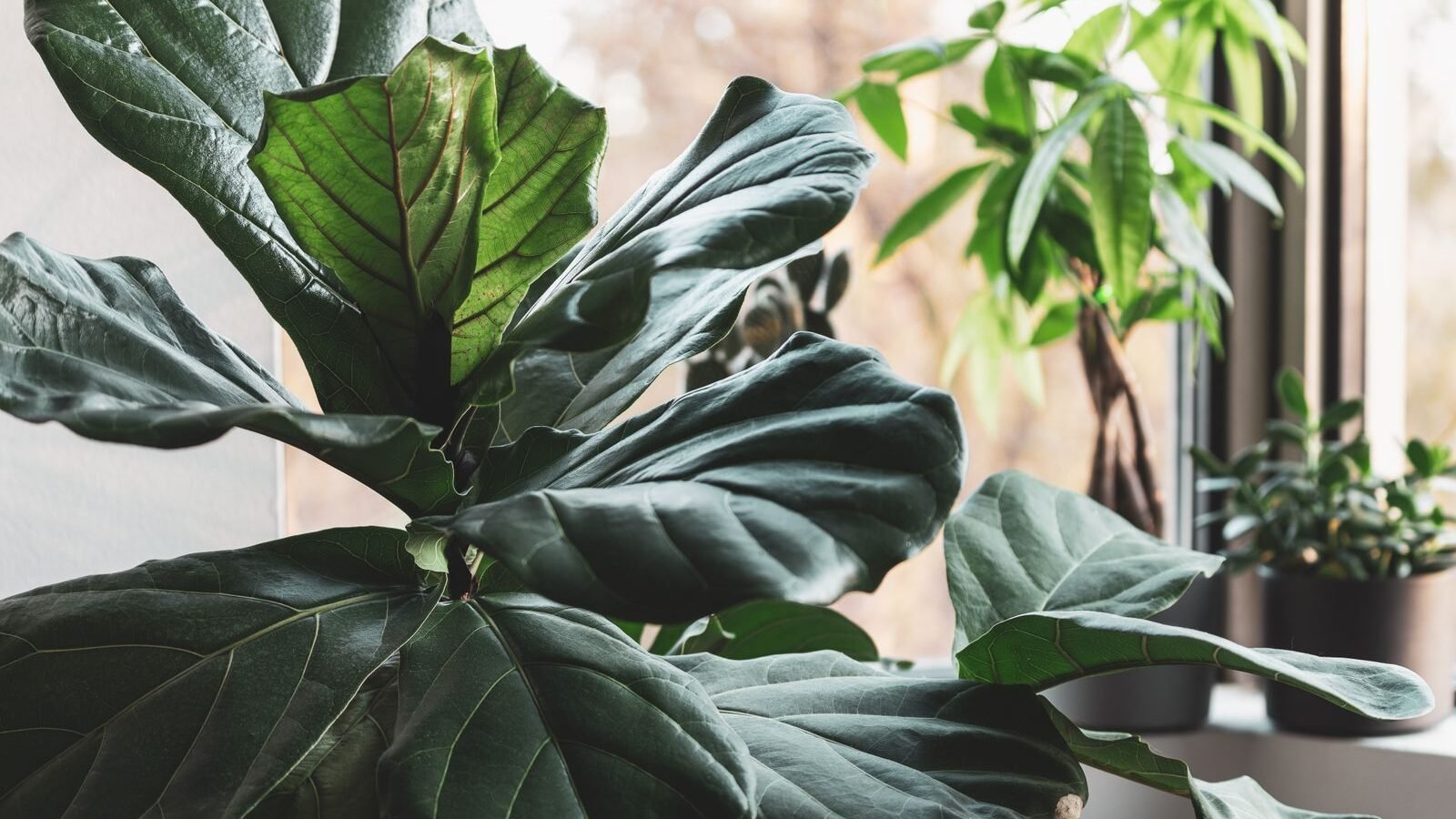
Fiddle leaf figs (Ficus lyrata) are gorgeous and famously dramatic. One day the tree looks perfect, the next there are big green leaves on the floor.
The good news: leaf drop is a stress signal, not a death sentence. Fix the cause, keep things steady, and new leaves will follow. Here is how to work out what your plant is telling you.
First, read the dropped leaves
The leaves themselves are your best clue. Pick one up and check it against this table.
| What the leaf looks like | Likely cause | First thing to do |
|---|---|---|
| Green and healthy, dropped suddenly | Shock: a move, draft or temperature swing | Keep it in one spot, away from vents |
| Brown spots in the middle or edges, soil wet | Overwatering and root rot | Check the roots, let soil dry |
| Crispy brown edges, soil bone dry | Underwatering or very dry air | Water deeply, raise humidity |
| Yellow lower leaves dropping slowly | Low light or natural aging | Move closer to a bright window |
| Small brown or black spots and webbing | Pests like spider mites or scale | Wipe leaves, treat with insecticidal soap |
| Pale, light green new leaves | Hungry plant | Feed in spring and summer |
Still unsure? Our free Plant Doctor matches symptoms to causes in a few taps.
The 7 causes of fiddle leaf fig leaf drop
1. Shock from a move or change
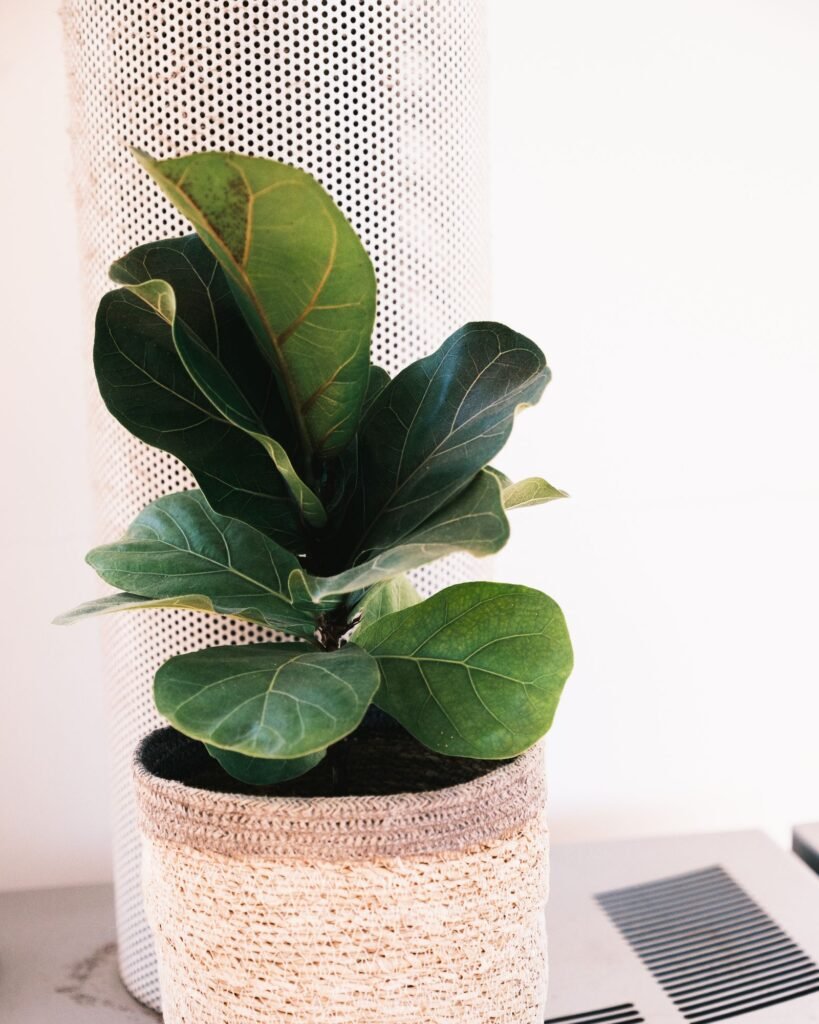
What it looks like: green, healthy-looking leaves falling within days or weeks of bringing the plant home, repotting it or moving it to a new room.
Why it happens: fiddle leaf figs adapt their leaves to the light they are in. A big change in light, temperature or humidity makes the plant shed leaves it can no longer support.
The fix: pick a good spot and leave it there. Losing a few leaves after a move is normal. It should settle in 2 to 4 weeks.
2. Overwatering and root rot
What it looks like: dark brown spots, often starting in the middle of the leaf, lower leaves dropping first, soil that stays wet for more than a week and sometimes a sour smell.
Why it happens: roots sitting in soggy soil run out of oxygen and rot. Rotten roots cannot feed the leaves, so the plant drops them. This is the most common reason indoor fiddle leaf figs decline.
The fix: stop watering. If the soil smells sour, slide the plant out and check the roots. Trim brown, mushy roots with clean shears and repot in fresh, fast-draining potting mix in a pot with a drainage hole.
Always use a pot with a drainage hole. Decorative pots without holes are the number one cause of root rot. Use a plastic nursery pot inside the decorative one and empty any water that collects at the bottom.
3. Underwatering
What it looks like: crispy brown edges, leaves curling or drooping, and soil pulling away from the pot.
The fix: water slowly until it drains from the bottom, then empty the saucer. Most indoor fiddle leaf figs need water about once a week in summer and every 10 to 14 days in winter, but always check the soil first. A moisture meter takes the guesswork out.
4. Not enough light
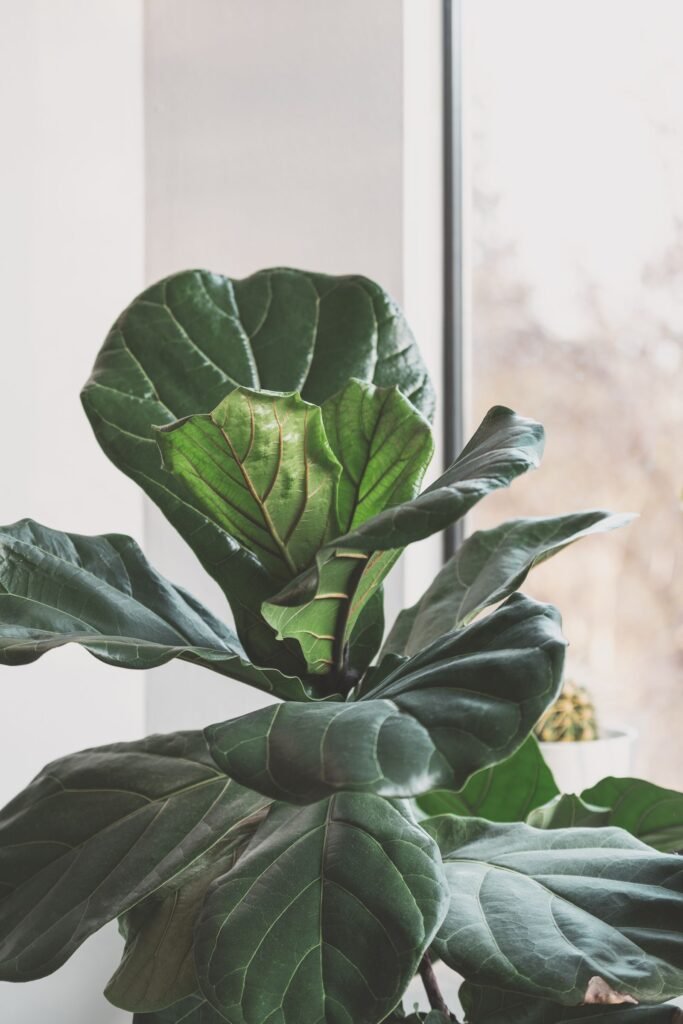
What it looks like: slow drop of lower leaves, leggy growth, small new leaves and a trunk leaning toward the window.
Why it happens: in the wild this is a rainforest tree that grows in strong light. Indoors it needs bright light all day, plus some gentle direct sun.
The fix: place it within about 3 feet of a bright east, south or west window (north in Australia). In winter, add a grow light if your rooms are dim. Check your spot with our Houseplant Light Meter and see our best grow lights.
5. Cold drafts and temperature swings
What it looks like: sudden leaf drop in fall or winter, often with dark patches on the leaves facing a door or window.
The fix: keep it between 65 and 80°F (18 to 27°C), away from heating vents, air conditioners, exterior doors and cold glass. Fiddle leaf figs are damaged below about 50°F (10°C).
6. Dry air
What it looks like: brown, crispy edges and tips, especially once the heating comes on.
The fix: aim for 30 to 65 percent humidity. Group plants together or run a small humidifier nearby. Misting alone does very little.
7. Pests
What it looks like: tiny dots or fine webbing under leaves (spider mites), brown bumps on stems (scale) or sticky residue.
The fix: wipe both sides of every leaf with a damp cloth, then spray with insecticidal soap every 7 days until the pests are gone. Check new plants before they join the others.
How to help your fiddle leaf fig recover
- Fix the main cause first. Most plants have one main problem, usually water or light.
- Stop moving it. Each move adds more stress.
- Do not repot unless the roots are rotting. Repotting is another shock.
- Hold off on fertilizer until you see new growth, then feed every 2 to 4 weeks in spring and summer.
- Be patient. New leaves usually appear within 4 to 8 weeks once conditions are right.
Rotate the pot a quarter turn every couple of weeks. It keeps the tree growing straight and stops one side from losing leaves because it never sees the window.
Should you cut off damaged leaves?
Leave leaves that are mostly green, even with a few brown spots, because they still feed the plant. Remove leaves that are more than half brown or yellow with clean pruners, cutting close to the stem. Dropped leaves will not grow back in the same spot, but healthy plants push out new leaves from the top and can branch if you prune the tip in spring.
Is a fiddle leaf fig toxic to pets?
It is mildly toxic. Like other ficus plants, a fiddle leaf fig has a milky sap that can irritate a pet’s mouth, stomach and skin, and the ASPCA lists ficus plants such as the weeping fig as toxic to cats and dogs. Keep fallen leaves off the floor if you have pets.
What helps a fiddle leaf fig stop dropping leaves
Prices change often, so check the store for today's price.XLUX T10 Soil Moisture Meter
Overwatering is the most common cause of leaf drop. The long probe reads moisture near the bottom of a tall pot, where root rot starts, so you only water when the plant actually needs it.
- Reads deep in big pots
- No batteries
- Inexpensive
- Downside: Shows a range, not an exact number
How to use it: Push it two-thirds of the way down and water only when it reads dry.
Compare stores — match the model, size, seller and delivery cost.
Search links show store results, not confirmed offers. Prices and availability must be checked at the store.
Fiddle Leaf Fig Plant Food (3-1-2 liquid, 8 oz)
A gentle liquid feed with the 3-1-2 ratio fiddle leaf figs like, made to use with regular watering in the growing season.
- Made for ficus
- Easy to dose with watering
- Gentle enough for frequent use
- Downside: Not needed in winter
- Downside: Small bottle
How to use it: Feed with watering in spring and summer only, once your plant is pushing new leaves.
Compare stores — match the model, size, seller and delivery cost.
Search links show store results, not confirmed offers. Prices and availability must be checked at the store.
Miracle-Gro Indoor Potting Mix (6 qt)
A lighter mix made for indoor plants that drains better than garden soil and is less prone to fungus gnats, which matters for a plant prone to root rot.
- Widely available
- Light and fast draining
- Good for repotting
- Downside: Add extra perlite for very large pots
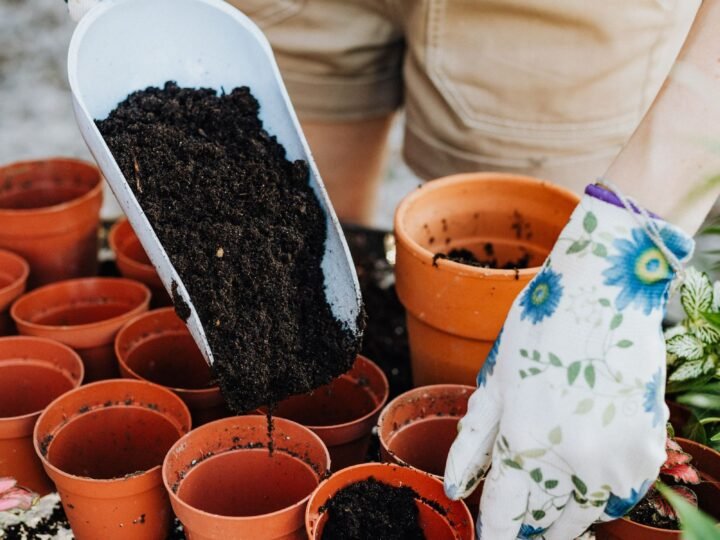
How to use it: Repot only if roots are rotting or circling, and choose a pot just 2 inches wider.
Compare stores — match the model, size, seller and delivery cost.
Search links show store results, not confirmed offers. Prices and availability must be checked at the store.
GE Grow Light LED BR30 (Balanced Spectrum)
A grow bulb that looks like ordinary white light and fits a standard lamp or clamp light, so you can top up winter light without a purple glow.
- Natural white light
- Fits normal sockets
- Easy to hide in a floor lamp
- Downside: Covers one plant, not a whole room
How to use it: Aim it at the canopy from 1 to 2 feet away for 10 to 12 hours a day on a timer.
Compare stores — match the model, size, seller and delivery cost.
Search links show store results, not confirmed offers. Prices and availability must be checked at the store.
Rolling plant caddy with locking wheels
Makes it easy to rotate a heavy tree toward the light and move it away from a cold window in winter, without lifting.
- Saves your back
- Locks in place
- Protects floors from water rings
- Downside: Raises the pot a few inches
How to use it: Turn the plant a quarter turn every couple of weeks and lock the wheels so it stays put.
Compare stores — match the model, size, seller and delivery cost.
Search links show store results, not confirmed offers. Prices and availability must be checked at the store.
FAQ
Why is my fiddle leaf fig dropping healthy green leaves?
Healthy green leaves dropping suddenly usually means shock, from a recent move, a cold draft or a big change in light or temperature. Keep the plant in one bright spot, away from vents and doors, and it should settle within a few weeks.
Will fiddle leaf fig leaves grow back?
Not in the same spot. A dropped leaf leaves a bare section of stem, but a healthy plant will grow new leaves from the top. Pruning the top in spring can encourage branching and fill the plant out.
How often should I water a fiddle leaf fig?
Water when the top 2 inches of soil are dry, usually about once a week in summer and every 10 to 14 days in winter. Water thoroughly, let it drain and never leave the pot sitting in water.
Is it normal for a fiddle leaf fig to lose leaves in winter?
Losing an occasional lower leaf in winter is normal because light levels drop. Losing many leaves quickly is not, and usually points to cold drafts, dry air from heating or overwatering.
Can a fiddle leaf fig recover from losing all its leaves?
Sometimes. Scratch the trunk with a fingernail: green under the bark means it is still alive. Fix the cause, give it bright light and warmth, water lightly, and wait several weeks for new buds.